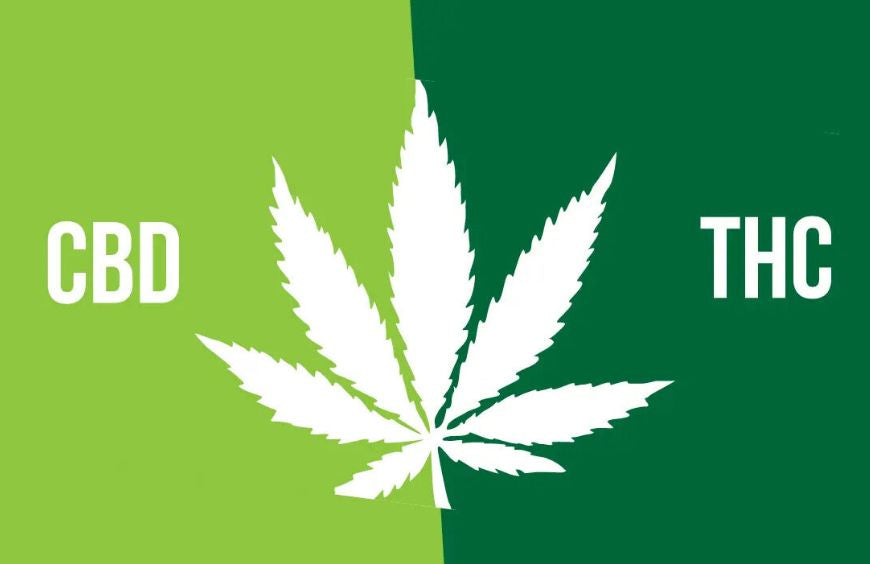
The world of cannabis is a realm of confusion and endless questions. Over the years, the cannabis plant has yielded hundreds of entirely natural compounds. Based on their biologically active properties, these molecules fall into two broad categories: terpenes and cannabinoids. The cannabinoid category encompasses a diverse and rich collection of compounds, the most common of which are tetrahydrocannabinol (THC) and cannabidiol (CBD). THC and CBD tend to cause confusion among cannabis enthusiasts. However, there is an important difference between the two terms. The chemical structures and effects of these cannabinoids vary considerably.
Our article will help you learn more about the differences between CBD and THC.
Differences Between CBD and THC
The difference between CBD and THC generally lies in THC’s psychoactive effects, which CBD does not have. But beyond this generalization, it’s important to note that the difference between CBD and THC is that these molecules do not interact in the same way with the endogenous receptors of the endocannabinoid system (ECS).
Furthermore, the differences between these two main cannabis molecules can also be seen in their respective characteristic properties.
Differences in interactions with the nervous system
CBD and THC have similar molecular structures. When examining their chemical composition, we see that they each have 21 carbon atoms, 30 hydrogen atoms, and 2 oxygen atoms. However, there is a difference in the arrangement of these atoms. It lies in the position of a single hydrogen atom. This is precisely what causes the difference between CBD and THC.
It’s worth noting that the ECS owes part of its function to the CB1 and CB2 receptors. CB1 receptors are found in the areas of the brain responsible for mental and physical processing. As for CB2 receptors, they are found in the central nervous system and the immune system. The THC molecule is characterized by its interaction with CB1 receptors. This explains why it causes the “high” effect observed in cannabis users.
Like THC, CBD also affects the endocannabinoid system. However, this interaction occurs in a different way. CBD interacts with CB2 receptors but inhibits them only to a limited extent. It does, however, increase levels of endogenous cannabinoids, such as anandamide, a molecule often referred to as the “happiness molecule.”
This unique interaction of each CBD or THC molecule thus determines their properties.
Properties of CBD
CBD is said to have several properties that may surprise many people.
Potential Anxiolytic and Anti-Inflammatory Properties of CBD
Anxiety and pain greatly affect patients' quality of life. This condition affects the body's immune system. There is an immediate response known as inflammation.
Studies have shown that chronic inflammatory reactions can promote the development of tumors and even cancerous growths when triggered by severe pain such as back pain, rheumatism, arthritis, multiple sclerosis, or cancer. It goes without saying that the structure of the affected organs is impaired.
For example, a 2007 study conducted by researchers at the California Pacific Medical Center showed promising results regarding the use of CBD. In fact, it may have a powerful anti-inflammatory effect. Furthermore, CBD may help combat stress and anxiety while promoting a sense of well-being and relaxation. Better yet, unlike opioids or painkillers, its effects are said to be long-lasting and do not lead to dependence.
Potential analgesic properties
Several research groups have also studied the potential analgesic properties of CBD. Of particular note are studies conducted in scientific research laboratories in Israel, Spain, and the United States that focused on pain. Their findings highlight the potential analgesic properties of CBD. However,other studies have also explored the analgesic properties of CBD.
Other potential properties
CBD is also believed to have several other properties: antioxidant properties, anti-addictive properties, and anti-angiogenic properties.
Properties of THC
The cannabinoids CBD and THC have an entourage effect. However, it must be acknowledged that THC has certain distinctive properties. Despite its psychoactive properties, THC may provide relief from certain conditions or symptoms in patients, such as: neuropathic pain, chemotherapy side effects, intraocular pressure associated with glaucoma, loss of appetite, asthma, sleep apnea, or Parkinson’s disease.
Entourage Effect: The Link Between CBD and THC
The effects of the cannabinoids CBD and THC are not always in conflict. In fact, they are often referred to as “sister molecules.” Cannabinoid science reveals a well-known concept: the entourage effect. There are, in fact, hundreds of chemical molecules called cannabinoids in the cannabis plant, and the entourage effect is based on the principle that the combination of these cannabinoids is what makes them powerful. We speak of the entourage effect when CBD produces very pronounced effects when combined with other cannabinoids (such as THC) or with other organic compounds (terpenes, flavonoids).
This synergy effect has been the subject of several studies, the results of which have not yet been refuted. According to these studies, consuming extracts from whole plants not only produces different effects but also more effects than consuming only certain pure compounds.
In addition, a study published by Professor Jeremy R. Johnson in the *Journal of Pain and Symptom Management* in 2010 also put forward a related point of view. Taking THC or CBD alone is not guaranteed to be fully effective when it comes to relieving certain types of pain, he stated. They were also less effective than a placebo alone, the professor noted. However, when CBD and THC are used in combination, the patient’s condition can be greatly improved.
Better yet, another study published in the same journal in 2011 also demonstrated that, in natural settings, various cannabinoids combined with terpenes and other flavonoids can benefit from synergistic effects, even when administered as isolates. Consequently, as the authors assert, certain conditions cannot be treated with a single cannabinoid.
It is in this context that a number of studies have been published. They report that THC alone may have significant therapeutic benefits, such as analgesic properties. Other studies have also shown that combining CBD with other compounds found in cannabis could significantly reduce the toxicity of THC.
Russo has also highlighted this entourage effect in certain conditions (depression, anxiety, insomnia, dementia, addiction), the treatment of which, according to his research, requires the combination of terpenes and other cannabinoids such as CBD and THC. Based on two terpenes (limonene and linalool), he demonstrated that CBD and THC could be more effective in treating these conditions when combined with terpenes. Furthermore, for conditions such as dementia in patients with Alzheimer’s disease, Russo also states that THC is effective only when combined with three terpenes: limonene, linalool, and pinene. The same results were found for terpenes such as linalool, caryophyllene, and myrcene in sleep disorders.
Finally, the entourage effect has also been demonstrated in animals. A 2019 study published in *Frontiers in Pharmacology* examined the effects of CBD and THC in a zebrafish model of neural hyperactivity and concluded that these cannabinoids act synergistically.
CBD and THC: What Does the Law Say?
The contrast between CBD and THC is also reflected in the legal status of each cannabinoid.
Approaches taken by international organizations or foreign legislation
A number of international institutions have, in fact, come out in support of CBD. By reclassifying it off the list of controlled substances, they have legalized its use. This is the case in France.
WHO's Perspective
The WHO, or World Health Organization, removed CBD from the list of stimulants in 2017. It certainly recommends further research to uncover its potential therapeutic benefits.
What the UN and the World Anti-Doping Agency Say
With regard to the UN, it should be noted that the drug control conventions make no reference to CBD. This is also the case with the World Anti-Doping Agency, which has no longer included CBD on its list of prohibited substances since January 1, 2018.
What the CJEU (Court of Justice of the European Union) Says
November 29, 2020, is an important date for future legislation on CBD and THC, if only within the French legal framework. In the Kanavape case, EU lawmakers clarified that since CBD oil has no side effects such as addiction or psychoactive effects, the decision to ban its use or consumption violates EU law.
In the ruling, the judge held that it was important to establish a legal threshold above which the consumption or use of CBD would be illegal.