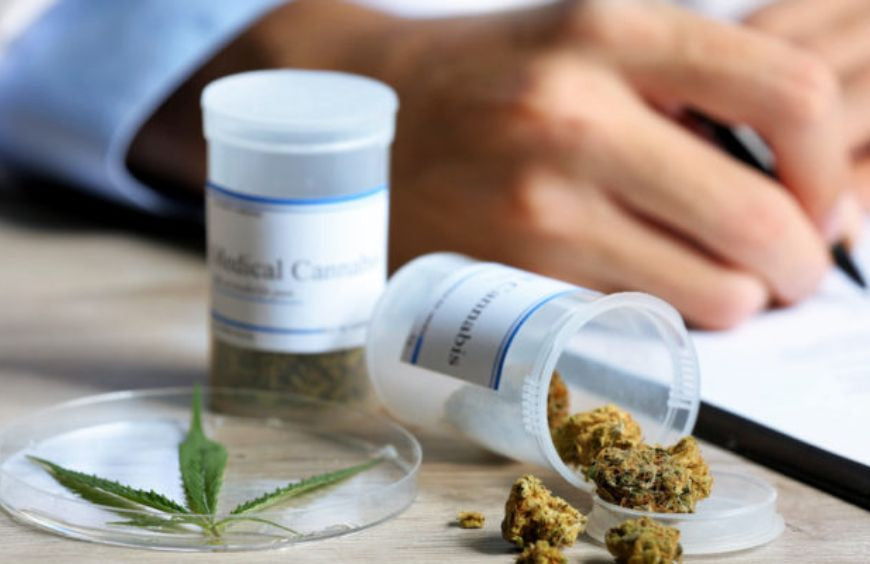
Medical cannabis is a general term that refers to any cannabis-based treatment used to relieve the symptoms of a disease or the pain associated with it. Medical cannabis is used in the United States, Europe, and around the world. In France, its use is still in the testing phase. In places where medical cannabis is legal, users are sometimes issued a “medical cannabis card” to identify them as medical cannabis users.
What is medical cannabis?
Medical cannabis, also known as therapeutic cannabis, refers to the use of cannabis by an individual—in this case, to treat symptoms or alleviate a specific condition. It is not only the psychoactive effects of cannabis that are sought in this context, but also its therapeutic effects.
The key to cannabis’s effects on the human body lies in cannabinoids, the active compounds in cannabis. There are currently more than 85 known cannabinoids. The two cannabinoids that have been most extensively studied and are most widely used for their therapeutic effects are cannabidiol (CBD) and tetrahydrocannabinol (THC).
Medical cannabis can be administered in various forms, ranging from the pills commonly found in pharmacies to dried flowers, whether from Bedrocan or from coffeeshops.
The Use of Medical Cannabis in the Treatment of Mental Illness
After many years of being stigmatized and marginalized, mental health issues are now being taken seriously and, at last, discussed openly. Research on cannabinoid-based therapies is capitalizing on this openness and bringing together a growing body of research on the subject.
A serious accident, an argument, a burglary... you may feel an uncontrollable fear when faced with these dangerous situations. This is perfectly normal under the circumstances. However, if this fear persists for weeks or months afterward, we may be dealing with post-traumatic stress disorder (PTSD).
This condition can affect anyone who finds themselves in a distressing and dangerous situation. It is also closely linked to other types of mental health disorders. According to several studies, people with PTSD are more likely to develop other mental health disorders, such as anxiety or depression.
Medications prescribed to people with post-traumatic stress disorder can cause a number of side effects, including depression, nausea, and dependence. They can also cause even more problems for the user. This is where medical cannabis comes in, as it does not cause side effects for the patient.
Consequently, several studies have established a link between controlled doses of cannabinoids and improved psychiatric outcomes for patients. For people suffering from post-traumatic stress disorder, it has also been found that overall well-being improves with cannabis treatment. CBD is one of the plant’s main cannabinoids and has no psychoactive properties. This means that users can alleviate their suffering without experiencing the euphoria typically associated with cannabis use.
Has medical cannabis proven to be effective?
Cannabis has been used as a medicinal plant since ancient Egypt, but this substance was not studied scientifically or rigorously in the 20th century due to its prohibition. It was not until 1992 that interest in the molecule resurfaced with Professor Raphaël Mechoulam’s discovery of anandamide, the body’s own endogenous cannabinoid. According to this professor at the Hebrew University of Jerusalem, “the endocannabinoid system plays a role in virtually all observed physiological systems.” And the flurry of research surrounding this relationship seems to prove him right.
Several hundred studies have thus confirmed some of the properties of medical cannabis. It does, in fact, have analgesic properties—particularly for refractory chronic pain—as well as antispasmodic properties, which are useful for multiple sclerosis and even partial epilepsy. It also has antiemetic and anti-nausea properties for patients undergoing chemotherapy or living with AIDS. It helps stimulate appetite in cases of severe weight loss or cachexia among the elderly during extended hospital stays, as well as in patients with Alzheimer’s disease or AIDS. Finally, medical cannabis also helps improve sleep, provides bronchodilation for asthma treatment, and promotes vasodilation, which can help manage glaucoma, among other benefits.
Cannabis, whether in its natural form or chemically modified, is therefore highly effective in treating certain medical conditions.
Other Promising Applications
After the research was completed, new opportunities also emerged. Although further research is needed, medical cannabis may be effective in treating the development of certain brain tumors and the progression of Alzheimer’s disease. It may also help treat obsessive-compulsive disorder (OCD) and excessive or pathological tics (Gilles de la Tourette syndrome).
Today, research continues to investigate dysfunctions of the endocannabinoid system to identify other potentially beneficial roles for exogenous cannabis (not produced by the body). According to Professor Mechoulam, “the cannabis-based drugs of the future will undoubtedly be linked to neuroprotection and chronic pain.” His team has also synthesized a cannabis derivative that is “highly effective for digestive disorders” and is working on derivatives that could be used to treat chronic inflammatory rheumatic diseases or cancer.
Whether used as a supplement to therapy (to manage side effects) or as an alternative to other treatments, medical cannabis has known and recognized benefits. It is therefore prescribed in certain countries based on specific medical indications (the list varies by country), source, and form of use.
In what form should medical cannabis be used?
Smoking cannabis increases the risk of lung cancer just as much as smoking tobacco—and even more, according to several studies. For medical use, it is therefore recommended in countries where it is permitted, in various forms that do not involve smoking.
In the Netherlands, the Medical Cannabis Authority recommends consuming it in the form of herbal teas or using vaporizers. These are devices that allow users to inhale the active ingredient in hemp in the form of vapor, without burning it and without producing carcinogenic residues.
Since 2005, a cannabis-based oral spray called Sativex has also been available in pharmacies in Canada for the treatment of serious neurological conditions (such as multiple sclerosis).
There are also two synthetic THC (tetrahydrocannabinol, the active ingredient in hemp) medications available in the United States and Canada. These are Cesamet and Marinol. Medical cannabis patients in English-speaking countries typically carry a “medical necessity card” to prove their good faith.
A few strains of medical cannabis
Any cannabis strain can be considered medical, as long as it helps alleviate the symptoms affecting patients. Some cannabis strains have a more medicinal profile than others. These include CBD-rich strains such as Charlotte’s Web. This strain has no psychoactive effects. It was developed to treat a young girl with epilepsy, Charlotte Figi, who has Dravet syndrome. For medical use, it is most often consumed in the form of a highly concentrated oil.
The Arlequin strain is also well known. It has a high CBD content. As a sativa-dominant strain, it is effective against THC-induced pain, anxiety, and paranoia. It may be helpful for conditions such as Parkinson’s disease and multiple sclerosis. It is relatively easy to find on our side of the Atlantic in certain coffee shops in Amsterdam.
The medical use of cannabis is often condemned and even demonized, particularly because the line between medicine (medical cannabis) and recreation (recreational cannabis) can sometimes be blurred.
France Is Still in the Experimental Stage
Following successful examples from abroad, France is launching its first pilot program on the medical use of cannabis. Thanks to existing scientific data and strong demand from patients and healthcare professionals, the first studies on the efficacy and suitability of cannabis for therapeutic use have been underway since 2018.
On October 7, 2020, a decree officially approved, on the recommendation of the National Agency for Medicines Safety, a clinical trial of medical cannabis. The study began with the first patient on March 31, 2021; it will last two years and involve up to 3,000 patients across 200 partner facilities.
Access to the trials is available for patients with one of five medical conditions: pain that is resistant to treatment, severe drug-resistant epilepsy, supportive care in oncology, painful spasticity associated with multiple sclerosis, and palliative care.
In such situations, access to medical cannabis trials will be provided to patients whose current treatment is ineffective or intolerable. Cannabis-based treatment will not be a first-line treatment. These patients will receive medical monitoring throughout the study and will be required to report on the treatment’s efficacy (effect on pain) and any side effects.
The prescription medications will come in the form of an essential oil taken orally or dried flowers inhaled via vaporization. The goal is to assess the feasibility of the cannabis treatment regimen and gather initial data on its use. However, the government has extended the study, citing the fact that it does not include enough patients to be meaningful. A story to watch, then…