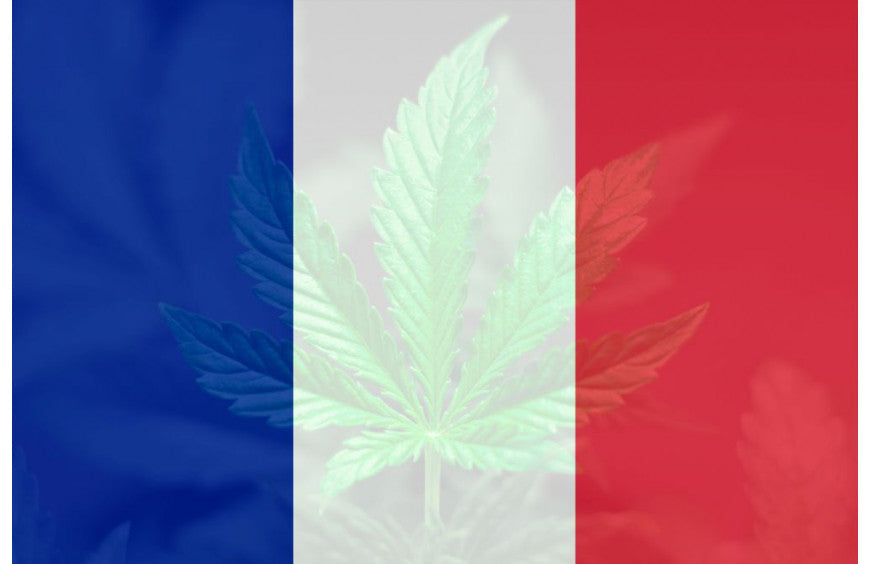
Unfortunately, France is one of the last European countries still resisting the legalization of medical cannabis. Despite this, the National Polytechnic Institute of Toulouse and the company LaFleur have nonetheless managed to secure the French government’s approval for their project to extract and manufacture medical cannabis.
What is this project about? Why did it take France so long to begin research on medicalcannabidiol?
Producing the best medical cannabis extract in France
Authorized by the French government for three years of research, the project to extract and manufacture medical cannabis began here in France at the National Polytechnic Institute of Toulouse in April 2021. A small team of four scientists—biologists and chemists—is tasked with bringing honor to France by developing the best method for extracting the active molecules from cannabis. This is a major challenge, as the cannabis extract produced must meet pharmaceutical standards.
Project leader Marion Alignan, an expert in plant fractionation, explains that the cannabis plant contains more than a hundred cannabinoids, such as THC—a prohibited psychotropic substance—and CBD, which is legal in France. The combination of certain molecules is thought to enhance the effects of other cannabinoids. This is known as the “entourage effect.” This study would therefore make it possible to identify the most effective combinations of cannabinoids in order to enhance the effects of cannabis. The goal is to produce a high-quality, more effective extract that pharmaceutical companies can use to manufacture medications for patients suffering from serious illnesses such as multiple sclerosis or cancer.
Marion Alignan also highlights the innovative nature of this experiment, as it is part of a green chemistry approach aimed at protecting the environment. The researchers are therefore using bio-based materials that are natural and renewable, and no solvents or petrochemical reagents will be used in the extraction process.
Cannabis Regulations Are Still Too Strict in France
French regulations were undoubtedly the main stumbling block for this project, which is starting two years behind schedule.
Two years wasted knocking on doors and trying to convince people of the merits of this research, and seeking authorization from customs and the National Medicines Agency.
According to Franck Milone, founder of LaFleur: “It’s very complex to conduct this type of research,” particularly because of the numerous administrative requirements.
The production and sale of cannabis—and particularly its flowers—are prohibited in France (not to be confused with hemp flowers, which are permitted). For this project, it was therefore necessary to source the material from another European country and, consequently, obtain customs authorization for the few grams of cannabis flowers needed for the research.
French research therefore lags considerably behind other countries, such as Israel and the United States, which have adapted by amending their regulations to advance research on medical cannabis.
Despite lagging behind, France is striving for excellence by seeking to produce a very high-quality cannabis extract while adhering to very strict environmental standards in its manufacturing process.