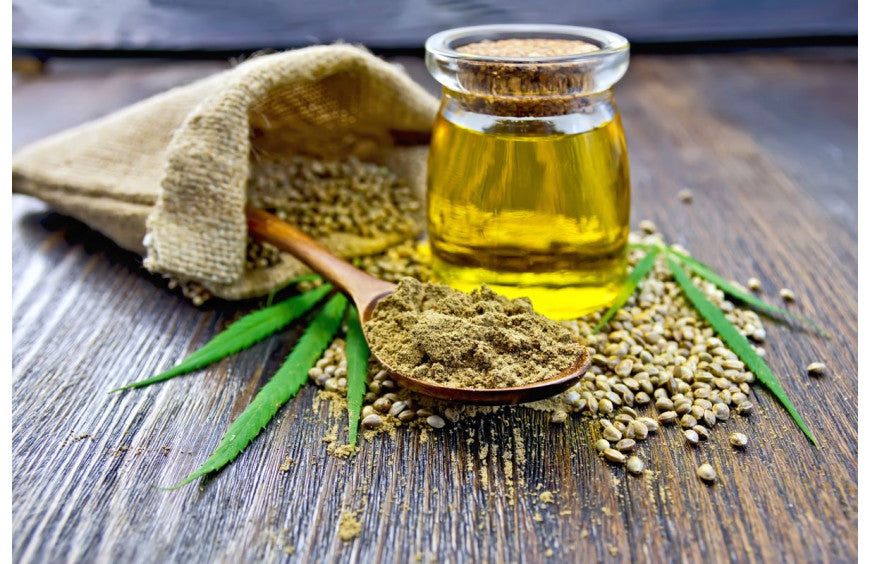
CBD (cannabidiol) oil and hemp oil are often confused. Furthermore, the French and European legal frameworks regarding cannabis are complex and do not make it any easier to understand: one can be purchased online, while the other is available in supermarkets, yet both oils come from the same plant.
So, what are the key differences between these two oils? What are their properties, and what exactly are they used for?
One plant, two very different oils
Both produced from hemp (Cannabis sativa L.), CBD oil and hemp oil are two completely different oils, both in terms of their origin and their composition.
Produced by cold-pressing hemp seeds, hemp oil is a vegetable oil rich in fatty acids and protein.
CBD oil, on the other hand, is extracted from the plant’s trichomes, which are found primarily in hemp flowers and, to a lesser extent, in the stems and leaves. Trichomes are glands that contain a viscous substance rich in active compounds (cannabinoids, terpenes, flavonoids). These compounds are of great interest for therapeutic use.
The hemp variety used to extract CBD oil is unique in that it is rich in cannabidiol but contains only a small amount of THC, the psychoactive compound found in recreational cannabis.
Benefits and Uses of Hemp Oil
Since it contains no active ingredients, hemp oil has no therapeutic value. It is, however, classified as a superfood. Used in both cosmeticsand cooking, this vegetable oil is rich in:
· Antioxidants: carotenoids and vitamin E are two allies in the fight against cellular aging.
· Proteins: They boost immunity, provide protection, and help combat fatigue.
· Vitamins B1 and B2, which are important for energy production as well as for cell growth.
· Omega-3 and omega-6 fatty acids: Beneficial for high blood pressure, these saturated fatty acids provide energy and help develop and protect cells. They are essential for the proper functioning of the nervous system and the brain.
· Minerals and trace elements (phosphorus, potassium, magnesium).
To preserve all of its benefits, hemp oil should be consumed or used cold, not heated.
Benefits and Uses of CBD Oil
CBD oil comes in various forms: capsules, cosmetics, sublingual oils, and even food products. We now know that it interacts indirectly with several receptors. Cannabidiol is believed to have a positive effect on many medical symptoms.
Some properties have been scientifically proven and are recognized in France for the following conditions:
· epilepsy, due to its anticonvulsant effect;
· multiple sclerosis, through its effect on spasticity;
· palliative care, for its appetite-stimulating and antiemetic properties, which are also beneficial for supportive care in oncology.
Many of its purported benefits require further clinical studies before they can be recognized in France. However, its numerous neuroprotective, psychiatric, and anti-inflammatory properties could be used to relieve or treat the symptoms of conditions such as dementia, Crohn’s disease, depression, Parkinson’s disease, osteoporosis, and others.
In summary, High Society hemp yields two oils with completely different yet complementary benefits. On the one hand, there is hemp seed oil—a true superfood—and on the other, CBD oil, extracted primarily from the flowers, which offers numerous therapeutic properties.