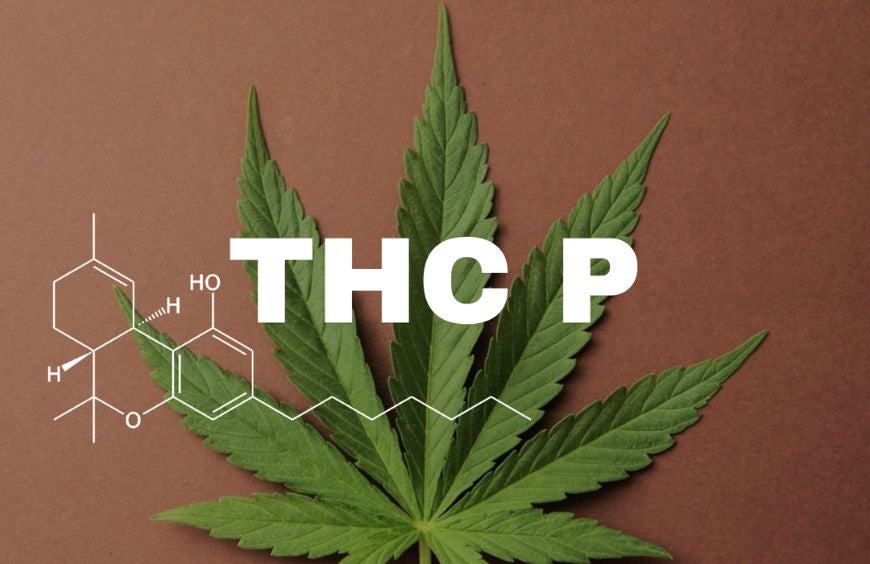
After Delta 8, THCV, HHC, HHCP, and H4CBD, here comes the latest semi-synthetic cannabinoid, THCP, derived from delta-9-tetrahydrocannabiphorol. Want to learn more about tetrahydrocannabiphorol, or THCP? You should know that this phytocannabinoid is attracting more and more attention from consumers and researchers these days.
Phytocannabinoids: Definition
Phytocannabinoids refer to a class of 21-carbon compounds that occur naturally only in the cannabis plant. Approximately 70 phytocannabinoids have been identified, including their acidic and neutral forms, their analogs, and other metabolic products. The plant can synthesize phytocannabinoids directly only in non-psychoactive forms. Thus, the main phytocannabinoids present in fresh plant material are delta-9-THCA, CBDA, CBGA, and CBDCA. However, the carboxyl group is not very stable and is easily lost as CO₂ when exposed to heat or light, thereby converting to a neutral active form.
Acid phytocannabinoids undergo partial decarboxylation during the drying and curing of the bud; subsequently, acid phytocannabinoids and some of their active neutral forms (delta-9-THC, CBD, CBG, and CBC) are primarily present in the plant’s dry matter. The intensive drying process of the plant material results in a decrease in acidic phytocannabinoids and an increase in neutral substances. When the plant is heated, each acidic cannabinoid undergoes decarboxylation into its neutral form under the influence of heat.
The standard method for decarboxylating small amounts of cannabis plant material (i.e., 20 g) is to place it in an oven at 110°C for at least 40 minutes. Heating the cannabis in butter or oil for as long as necessary also initiates the process.
Interestingly, the most studied phytocannabinoid—in its neutral form, delta-9-THC—is primarily responsible for the psychoactive effects caused by cannabis use, whereas its acidic form, delta-9-THCA, has no psychoactive activity.
What is THCP?
THCP, also known as delta-9-tetrahydrocannabiphorol, is a synthetic analog of THC, the main psychoactive component of cannabis. It was first synthesized in a laboratory and patented by Tilray Inc., an international pharmaceutical company.
Unlike THC, THCP is a cannabinoid found in very low levels in the cannabis plant. Like THC, CBD, and most cannabinoids, it is derived from the parent cannabinoid, cannabigerol (CBG).
It is understood that THCP was first discovered in 2019, when it was found by accident while studying an Italian cannabis strain called FM2. At the time, the strain was being cultivated as part of medical cannabis research under the supervision of the Italian government.
Professor Guiseppe Cannazza and his team conducted research on FM2 and discovered THCP and another cannabinoid, CBDP. It turned out that the strain contained high levels of CBDP and THCP, which allowed them to detect them. The reason THCP has gone unnoticed until now is that only trace amounts are present in mostflowers. In fact, the concentration of THCP varies depending on the strain.
Based on this discovery, Tilray Inc. filed a patent application for its composition and synthesis method. Since then, researchers around the world have studied the molecule in depth. In the near future, who knows if plants with high concentrations of delta-9-tetrahydrocannabiphorol will be developed by crossing THCP-rich strains.
What are the potential effects of THCP?
The expected effects of this molecule are the same as those of THC, but they will be more potent. In fact, scientists estimate that this cannabinoid is at least 30 times more potent than THC.
More specifically, this means that THCP is just as psychoactive as THC. Consuming it is said to cause intoxication and euphoria, with potential side effects such as red eyes, food cravings, altered sensory perception (of time, space, and speed), and even the potential for addiction.
Other side effects may occur, such as dry mouth, drowsiness, stress, or anxiety attacks… However, research on THCP is still in its infancy, and at this stage, these are merely speculations based on the effects of THC.
How does THCP actually affect our bodies?
THCP is an endocannabinoid, a molecule that interacts with our endocannabinoid system. This system consists of CB1 and CB2 receptors distributed throughout our body. These receptors regulate many systems, including:
- the nervous system,
- the inflammatory system,
- the muscular system,
- the musculoskeletal system…
Thus, THCP has a high affinity for these receptors and forms a bond that regulates the activity of certain functions.
THCP: Is It a Scientifically Interesting Molecule?
THCP quickly attracted the interest of cannabis legal professionals due to its effectiveness. This cannabinoid has a unique molecular structure that is surprisingly abundant. But that’s not all. In fact, THCP is a molecule that could bring about significant changes, particularly from a medical and therapeutic standpoint.
In fact, THCP binds more quickly and effectively to the CB1 and CB2 receptors in the endocannabinoid system. That is why it is more potent than THC.
This molecular structure and mechanism of action could open new doors and lead to real therapeutic advances. In fact, it offers a new perspective on how cannabinoids interact with the body.
Closer ties, faster and more efficient action… these benefits would make it possible to:
- To provide more effective pain relief. THC is known to be a powerful pain reliever. Even more potent, THCP could help relieve pain and inflammation associated with serious diseases such as Parkinson’s disease or multiple sclerosis.
- A more enjoyable way to combat stress and anxiety: THCP may help combat anxiety more effectively by targeting the mechanisms (cortisol and serotonin) that cause it.
- THCP could help provide relief to patients with serious illnesses such as cancer. CBD- and THC-based products are already in use, particularly among patients undergoing radiation therapy and chemotherapy. THCP could also be a helpful addition for them.
Of course, further research is needed to support these observations. But there is no doubt that as research progresses and expands, major discoveries will soon be made.
Is THCP dangerous?
THCP is a molecule naturally synthesized by the cannabis plant. Its molecular structure is nearly identical to that of THC. As such, it could offer new opportunities for medical advancement.
However, its potency and rapid absorption make it a substance that must be handled with care. Therefore, certain precautions should be taken when consuming it. First, make sure you won’t need to drive afterward and instead take advantage of a quiet moment to try THCP. It’s also important to start with a low dose and increase it gradually based on how you feel.
Like all other cannabinoids found in cannabis, THCP is not recommended for pregnant women, minors, or people undergoing medical treatment.
What is the legal status of THCP?
The legal status of THC varies from country to country. In the United States, it is not currently approved for medical use, but it is available through clinical trials or in states with medical cannabis programs. In some countries, it is illegal to purchase or consume THCP without a prescription.
In France, it has not been classified as a narcotic since it is one of the newly discovered cannabinoids. There is still legal uncertainty surrounding this cannabinoid, so its sale or consumption is not currently prohibited. Only time will tell whether this molecule will become as ubiquitous as CBD or banned like HHC. We all know that legislation can change at any time, especially when it comes to cannabis.
Conclusion
THCP is a new cannabinoid on the market. Because it was only recently discovered, we do not yet know the potential health risks it may pose, nor can we confirm any potential health benefits. It is important to note that this is a very potent cannabinoid and should be reserved for an informed and experienced audience accustomed to consuming psychoactive cannabinoids. It is a highly effective alternative to THC or HHC.