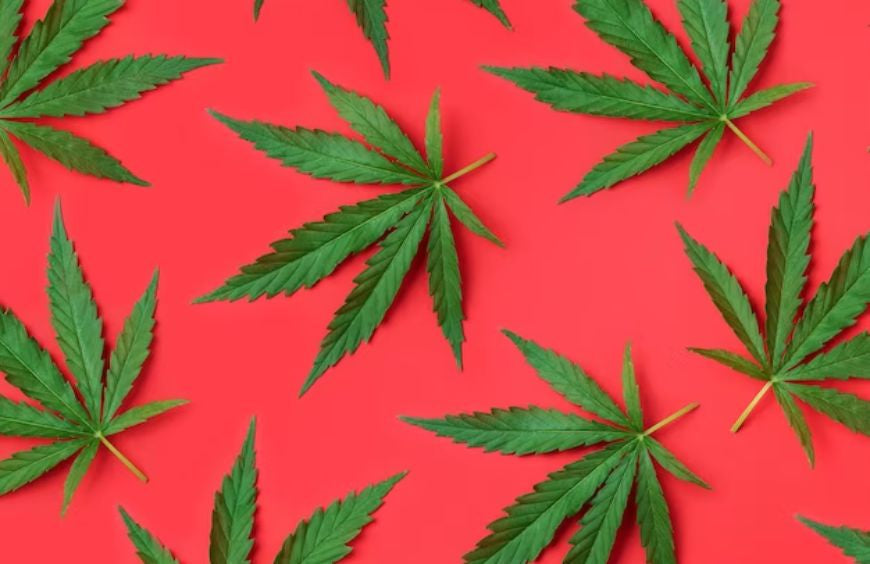
Hemp leaves are known to relax the body and relieve anxiety. They are also believed to have antioxidant and anti-inflammatory properties. In fact, in a recent study published in *Antioxidants*, researchers explored the antioxidant potential and extraction efficiency of active compounds derived from cannabis leaves using various solvents and mixtures. Identifying cannabis strains with superior antioxidant properties could yield leaves rich in antioxidants. This would promote sustainability and minimize waste.
Hemp and cannabis: What are the differences?
Cannabis is a versatile plant with industrial, nutritional, ornamental, medicinal, and recreational uses. The classification of cannabis plants is based on their delta-9-tetrahydrocannabinol (delta-9-THC) content. Cannabis contains a variety of active compounds, including cannabinoids, terpenes, and flavonoids, which exhibit multifaceted biological activities that can influence pharmacological profiles in humans.
Cannabinoids such as cannabidiol ( CBD ) and tetrahydrocannabinol (THC) have demonstrated potential therapeutic properties, while terpenes and flavonoids possess medicinal properties and antioxidant activity. Often considered industrial waste, hemp leaves contain high levels of active compounds, making them a valuable resource for extraction. The use of hemp leaves contributes to a zero-waste approach and the industry’s sustainability.
Hemp
Hemp, also known as cannabis, is undoubtedly one of the most important plants cultivated by humans. Its use dates back at least 10,000 years, and the plant has a wide variety of uses. Used as a food source for humans and livestock, and to make everything from textiles and paper to building materials, Chinese emperors mentioned hemp and its uses as far back as 6,000 years ago. The American Declaration of Independence was even drafted on hemp paper, although the final version was written on vellum.
Although hemp belongs to the Cannabis species, it cannot be used as a recreational drug. This is because the plant commonly known as hemp contains only small amounts of THC (tetrahydrocannabinol), the psychoactive compound in cannabis. However, hemp contains significant amounts of CBD, as well as other cannabinoids, and is widely used today to make CBD products and supplements.
Hemp seeds are considered a true superfood with extraordinary nutritional benefits. They are rich in healthy fats and essential fatty acids, as well as protein, vitamin E, amino acids, minerals, and other valuable nutrients.
Cannabis
Unlike hemp, the term “cannabis” is more general: it can be used to describe any plant or product of the genus Cannabis. Marijuana, of course, is used to describe the type of cannabis that contains high levels of THC
The term “marijuana” has largely been replaced by “cannabis” these days. As a result, you may hear both terms used interchangeably. To clear up any confusion, you may also hear the term “recreational cannabis” used to better describe the psychoactive profile of a particular strain.
In general, if you see the terms “cannabis” and “hemp” used to distinguish between two plants or products, you can assume that the cannabis in question has a more diverse cannabinoid profile and may contain THC. On the other hand, if you see the term Cannabis sativa used interchangeably with hemp, this is likely standard practice in plant taxonomy.
Technically, the genus Cannabis can be divided into three species or subspecies:
- Cannabis sativa,
- Cannabis indica,
- Cannabis ruderalis.
While recreational cannabis, or marijuana, contains varying proportions of these three (sub)species, hemp is derived exclusively from Cannabis sativa.
A promising new study
Background
In this study, three hemp varieties—Bialobrzeskie, Henola, and Tygra—were obtained from an experimental station. The plants were grown in accordance with recommended agricultural practices, including soil preparation, seeding, herbicide application, and fertilization. Two methods are used to extract cannabinoids from hemp leaves:
- maceration,
- ultrasonic extraction.
Using various solvents and solvent mixtures, the extracts were filtered and concentrated.
Chromatographic analysis was performed using ultra-high-performance liquid chromatography to determine the extract’s cannabinoid profile. The extract’s antioxidant activity was evaluated using four different assays:
- 2,2-diphenyl-1-picrylhydrazyl (DPPH),
- 2'-Azino-bis(3-ethylbenzothiazoline-6-sulfonic acid) (ABTS),
- copper(I) reducing antioxidant capacity (CUPARC),
- and the iron-reducing antioxidant capacity (FRAP).
Each test measured a different aspect of the extract’s antioxidant potential. Trolox, a known oxidizing compound, was used as a reference for comparison. The data obtained were analyzed using statistical methods such as skewness, kurtosis, ANOVA, and post hoc tests. Principal component analysis (PCA) was used to explore the relationship between the cannabinoid profile and the extract’s antioxidant activity. A multidimensional comparative analysis (MCA) was also performed to evaluate and rank the extracts based on their overall antioxidant activity.
Result
The researchers studied the levels of four cannabinoids (CBD, delta-9-THC, CBG, and CBD) and the antioxidant activity of hemp leaf extracts. The results showed that the cannabinoid content varied among different cannabis strains and extraction methods.
The highest CBD content was found in the Henola leaf extract obtained by methanol maceration, while the highest CBG content was observed in the Tygra leaf extract obtained by ethanol and methanol maceration. Bialobrzeskie leaf extracts prepared by sonication in methanol showed the highest delta-9-THC content, and Tygra leaf extracts prepared by sonication in isopropanol had the highest CBC content.
In addition, antioxidant activity was assessed using four different tests:
- DPPH,
- ABTS,
- CUPRAC
- and FRAP.
The results showed that the extracts obtained using different extraction methods and solvents exhibited varying levels of antioxidant activity. Among all the extracts obtained by ultrasonic extraction using single-component extractors, the Bialobrzeskie leaf extract obtained with methanol exhibited the highest antioxidant activity in the DPPH, FRAP, and CUPRAC assays.
The Tygra leaf extract obtained using methanol showed the highest antioxidant potential in the ABTS assay. Among the extracts macerated with various solvents, the methanol leaf extract from Bialobrzeskie showed the highest antioxidant activity in the DPPH, ABTS, and FRAP assays. In the CUPRAC assay, high antioxidant potential was observed in Tygra leaf extracts macerated with isopropanol.
Among a group of extracts prepared by ultrasonic extraction using two-component extractants, the Bialobrzeskie leaf extract prepared with ethanol and methanol (50:50, V/V) showed the strongest antioxidant potential, while the ABTS prepared from Tygra leaf extract using ethanol and methanol (50:50, V/V) exhibited the highest antioxidant activity among the ABTS samples tested.
The researchers also performed an MCA to compare all the extracts and identify the most effective antioxidant extracts. The MCA results showed that the Bialobrzeskie leaf extract obtained by ultrasonic extraction with methanol was the most effective antioxidant. The relationship between cannabinoid content and antioxidant activity was explored using PCA.
The analysis showed that the variation in the samples was mainly explained by the first principal component (PC1), which was negatively correlated with antioxidant activity. PC2 was negatively correlated with antioxidant activity and positively correlated with cannabinoid content.
The study highlights a potential interaction between cannabinoid content and antioxidant activity in hemp leaf extracts. While delta-9-THC and CBD showed strong correlations with antioxidant activity, CBD and CBG showed relatively weak correlations. It should be noted that cannabinoids interact within the human body and that their combination enhances the therapeutic potential and efficacy of cannabis-based therapy.
What can we conclude?
In conclusion, this study highlights the antioxidant potential of hemp leaves using various extraction methods, particularly the Bialobrzeskie, Tygra, and Henol varieties. These extracts possess significant antioxidant properties that protect against oxidative damage caused by free radicals. Among these extracts, the Bialobrzeskie leaf extract obtained by ultrasonic-assisted methanol extraction exhibited the highest antioxidant activity.
Further research is needed to explore other biological activities of hemp leaves and to study in vivo applications. The study highlights the need to explore alternative extraction techniques, various applications, and delivery methods to realize the full therapeutic potential of hemp leaves.