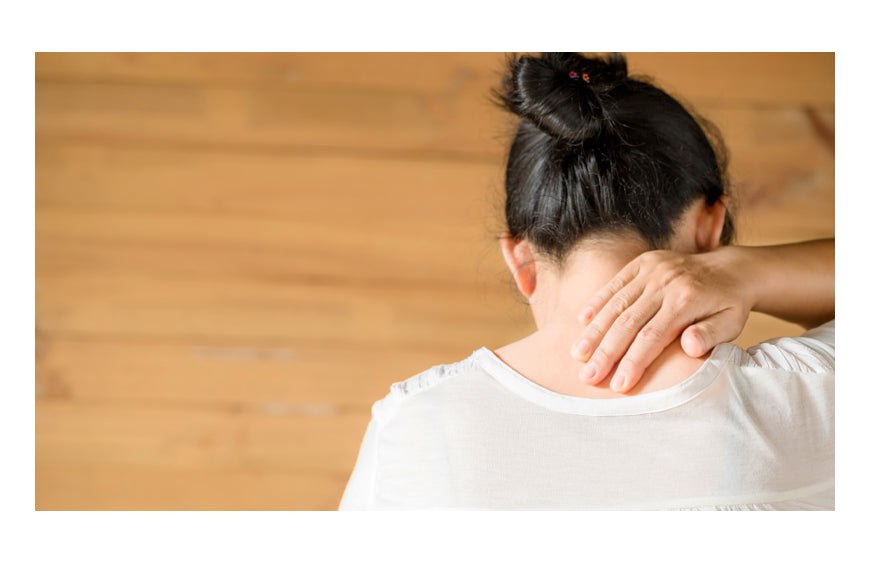
Osteoarthritis. A condition characterized by a slow and painful deterioration of our joints. It can affect any part of the body, from our hands to our knees, including the spine. Another area of the body that can be affected is the neck and cervical spine. This is referred to as cervical osteoarthritis.
In this article, we provide all the details you need to understand what cervical osteoarthritis is, its symptoms, standard treatments, and how CBD might help relieve it.
Definition of Cervical Osteoarthritis
10 million. That is the number of French people who report suffering from joint pain, including osteoarthritis. Generally speaking, osteoarthritis is defined as a joint disease and is even considered the most common joint disease in the world.
It can appear as early as age 50 and is characterized by cartilage degeneration. The cartilage undergoes severe weakening, eventually leading to its gradual destruction. This degeneration is accompanied by joint pain that can be more or less tolerable depending on the progression of the disease. It’s important to understand that each of our joints is covered with cartilage. Cartilage serves to facilitate our movements by allowing our bones and joints to glide smoothly against one another. Treatments for osteoarthritis are crucial for alleviating its symptoms and making daily life more comfortable.
Conventional Treatments for Cervical Osteoarthritis and Their Limitations
To treat osteoarthritis—or at least relieve its symptoms—several conventional treatments are already available. Their characteristics, side effects, and effectiveness vary.
First example: medication. Most of the time, treatment includes pain relievers, anti-inflammatory drugs, and corticosteroid injections.
Pain relievers are undoubtedly the best-known medications. They are made with acetaminophen and help relieve pain and slow the progression of the disease. Anti-inflammatory drugs, on the other hand, tend to target specific symptoms. Finally, corticosteroid injections are an option, but it’s important to note that this is a particularly aggressive treatment.
No matter which treatment or medications you choose, it’s important to remember that their effectiveness always comes with a number of side effects.
Can CBD Help Relieve Osteoarthritis?
CBD is said to offer a wide range of therapeutic benefits, and these benefits are said to be particularly effective in relieving osteoarthritis—or at least its symptoms. But is that really the case?
The first property of CBD that interests us is its anti-inflammatory effect. In a 2015 study, tests were conducted on patients suffering from osteoarthritis and various forms of rheumatism. The patients who were given CBD reported rapid and significant relief.
In particular, it has been noted that CBD oil may help reduce inflammation. Depending on how it is consumed—such as sublingually—its effects may appear very quickly and last over time, especially with regular use.
If you’re hoping to maximize these well-known effects, you’re always free to combine different methods of CBD consumption. For example, you can apply CBD oil to areas experiencing inflammation while simultaneously drinking CBD-infused teas and herbal teas. Another example is CBD e-liquids for vaping, which also fit very well into your daily routine, offering effective yet subtle relief.
Compared to medications, cannabidiol remains a natural substance that is completely safe for your health. This means that using CBD poses no health risks, neither in terms of side effects nor in terms of addiction potential. Beyond being a kind of natural remedy with numerous therapeutic benefits for osteoarthritis, it’s worth noting that thesports community is also drawn to its properties.
One last point? Dosage. Every consumer has a different profile, a different metabolism, and, above all, different personal needs. The major advantage of CBD is that there are no set recommendationsfor its dosage.You can therefore safely adjustyour daily CBD intake based on the effects you want to achieve.
What type of CBD should you use to relieve cervical osteoarthritis?
CBD has been growing in popularity since it was legalized, and osteoarthritis symptoms are among the many therapeutic benefits it is said to offer. But did you know that you can consume cannabidiol in a wide variety of forms?
Here are a few ideas.
CBD Oil: A Must-Have Product
As a leading method of consumption due to its accessibility and versatility, CBD oil needs no introduction. Packaged in a small bottle with a dropper, CBD oil is the ideal product for relieving osteoarthritis. Whether taken sublingually, applied topically through massage, or added to food, the choice is yours. Another detail? The product’s CBD concentration can be adjusted to suit your needs, and can even reach20% to help relieve the most severe symptoms of osteoarthritis.
CBD-based cosmetics and creams: Yes, they work!
People aren’t always aware of this, but it would be a shame to miss out on this experience. CBD can be used in the form of cosmetics, such as creams. No instructions are needed to use them. CBD-based cosmetics are applied exactly the same way as your usual creams and can be safely incorporated into your daily skincare and beauty routine.
CBD Infusions and Herbal Teas: Simple and Effective
Finally, if you’re looking for the simplest and most discreet option—without compromising on effectiveness—CBD herbal teas and infusions are perfect for you. To enjoy them, simply follow your usual tea-making routine. Grab a cup, measure out your desired amount of tea, add hot water, and savor the benefits they have to offer.