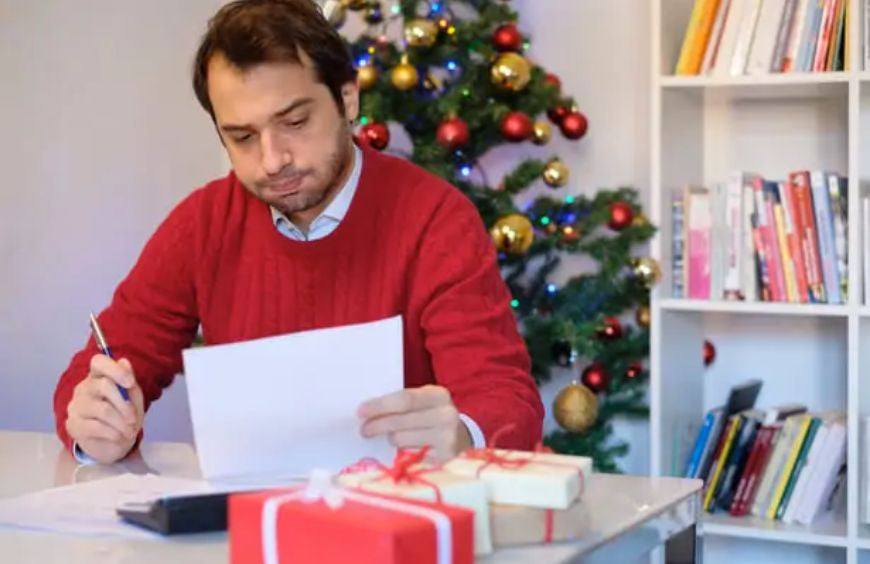
While children eagerly await Christmas, for many people, the holiday season is synonymous with anxiety and stress. Although most of us enjoy this time of year, various studies show that about 30% of French people do not like Christmas. The reason? Fear of family conflicts, loneliness, overeating, or the stress of planning.
Today, the idea that celebrating the end of the year is synonymous with happiness and sharing is so deeply ingrained in our subconscious that it’s hard to escape it. But the excessive consumerism surrounding this time of year sometimes causes it to lose all its meaning.
Fear of certain questions, judgments, and comments; discovering certain toxic family dynamics; feeling different or isolated… these are all factors to consider that can ruin your holiday season.
Gifts, family, stress… Why do some people hate the holiday season?
Decorations, family dinners, and gifts… In just under a month, the magic of Christmas will be in full swing with New Year’s Eve on December 24. While this occasion is usually filled with good cheer and a warm, friendly atmosphere, some people don’t really enjoy these family gatherings.
According to an Appinio survey, 8% of French people say they “don’t really like” Christmas. What’s more, as many as 1% “hate” this time of year! Stress, excessive alcohol consumption, and disappointment can actually ruin the holiday season.
Gifts: Stress and Disappointment
It's hard to imagine Christmas without gifts. It's the stress of finding gifts that respondents dread the most. Every year, 42% dread this time of year.
This is an especially daunting challenge when you consider that one in two French people (51%) has received a gift they didn’t like. To avoid disappointing your loved ones, steer clear of clothes and shoes—which 19% of men cite as the worst gift they’ve ever received—as well as home decor items, which 18% of women cite.
Among those who were disappointed, the vast majority (68%) still keep the gift, even if they don’t like it and will probably never use it. Only 15% resell it, and 11% give it to someone else. These figures highlight a particularly harmful aspect of the holiday season: overconsumption. The French are well aware of this. 35% cite this problem as the second most distasteful aspect.
Overconsumption also applies to food, as overeating ranks third on the list of unpleasant aspects of Christmas.
Too Much Pressure at Christmas?
Unfortunately, stress isn't limited to gifts. While Christmas is traditionally celebrated with family, 21% of French people dread family obligations and gatherings.
Gifts, decorations, meals… For some people, Christmas involves a lot of planning, which can cause a great deal of anxiety.
Women are often at the forefront of these large family gatherings. In 60% of cases, it is women who prepare the New Year’s Eve meal. This gap widens with age: more than two out of three women (70%) but fewer than one out of two men (46%) over the age of 35 say they cook for this occasion. And among people of all ages who do not cook themselves, 38% name their mother as the cook. Only 7% name their father.
Should we party with or without alcohol?
At the dinner table, few families can do without champagne or wine. Only 22% of French people don't drink any alcohol at all at Christmas.
The social aspect of alcohol seems to be the main reason why the French drink. 44% say they enjoy drinking with their families. For some, however, this group dynamic can turn into pressure: 17% of the French drink because everyone else at the table is drinking as well.
According to them, alcohol mainly helps the French enjoy better vacations. Thirty-three percent cite alcohol as a mood booster, and 31 percent believe that getting drunk at Christmas makes them feel better. It thus improves their mood even when they are in a bad mood.
Finally, only 27% of French people say they drink alcohol at Christmas because they like the taste.
Naturally, this sometimes takes its toll the next day. While more than one in two French people (63%) drink alcohol without getting drunk on Christmas Day, 13% are at least a little drunk on that occasion. Watch out for hangovers…
Is winter a depressing time of year?
It is well known that winter affects our behavior and mood. The days grow shorter, the cold becomes increasingly oppressive, and the atmosphere is gloomy. Numerous studies show just how dependent the body is on light and how beneficial it is for the mind. Since light regulates our internal clock, it is only natural that these seasonal changes affect our state of mind.
In fact, a lack of sunlight—as well as a lack of physical exercise—contributes to fatigue, sometimes leading to a loss of libido and sleep disturbances. And it all works like a vicious cycle: the more inactive we are, the more “lazy” we become. Furthermore, the sun provides us with two-thirds of our vitamin D needs (which is necessary for the absorption of calcium and phosphorus).
So how can you enjoy the holiday season without stress or anxiety?
The holiday season is traditionally synonymous with fun and relaxation, as it is associated with the joy of the holidays and the rest provided by public holidays. However, it is all too often associated with a period of increased stress… To help you, here are a few tips.
Make a list and check it
The first thing to do is make a list of all the tasks that need to be completed. This will not only help you keep track of what needs to be done, but also ensure that nothing is overlooked.
When making a list, start with the most important items (in terms of time or money) and work your way down. That way, if something comes up that doesn't require immediate attention, it won't disrupt your schedule too much.
Once you've finished making the list and double-checking it, go through each item one by one. Mark each task as completed once it has been confirmed by another family member or a friend.
Shop online instead of in-store
You know that feeling when you're at the mall and suddenly all the Christmas decorations, the bright lights, and the music hit you like a ton of bricks? Your heart starts racing, your hands get sweaty, and suddenly, you feel like you can't breathe.
That's what happens to most people who shop during the holidays. Instead, you can shop online from the comfort of your own home. And there are plenty of benefits:
- You can shop at your own pace, without any pressure or crowds.
- You no longer have to wait in long lines.
-
The Internet offers much more variety than stores, which means more options for everyone!
Avoid last-minute shopping
To ensure a successful holiday season, it’s best to get organized to avoid last-minute stress, whether it’s for meals or gifts. Find out in advance what your loved ones would like to eat so you can do your shopping on time. Starting your Christmas shopping early will allow you to find or order what you need, and your gifts will take pride of place under the Christmas tree on December 24 and 25.
Assign tasks
Holidays should be a time for joy, not stress and arguments. Remember that you're not the only one eating, and anyone can pitch in. Also, do as much preparation as possible ahead of time so you can enjoy this special day.
Be realistic
Don't set unrealistic goals. If things don't go the way you imagined, you might end up disappointed. Let things unfold naturally and don't have too many expectations; that way, you'll have a wonderful New Year's Eve or a smooth transition into the new year.
Set aside some time for yourself
Despite the Christmas rush, don't forget to make time for yourself. Half an hour of reading in bed, a nice bath with a face mask, a little exercise to stretch your legs, and even a Christmas movie with some hot chocolate… In short: treat yourself!
Which anti-stress foods should you prioritize?
Stress takes a toll on our nerves. Some situations overwhelm us so much that there’s only one thing left to do: eat, eat, and eat some more. The anti-stress diet, however, is very different from what most people turn to in those moments. In fact, many reach for chocolate, others prefer pizza, and still others enjoy a glass of wine. But normally, when you find yourself in a stressful situation, you should turn to other foods instead.
Dark chocolate
Chocolate is certainly the best-known stress reliever, largely because of its relatively high magnesium content. However, only dark chocolate with a high cocoa content helps combat stress. It contains tryptophan, a substance involved in the production of serotonin in our bodies. It helps produce “happiness hormones,” so to speak. In addition, dark chocolate contains less sugar than milk chocolate.
Honey
Honey—especially linden honey—has the ability to soothe the entire nervous system thanks to the trace minerals it contains (potassium, calcium, manganese), which help combat stress. Honey is particularly recommended for its effect on anxiety.
Nuts
Nuts are the perfect stress-relieving snack. By eating a mix of different nuts, you provide your body with plenty of the potassium it needs. Potassium helps maintain stable blood pressure, so your heart rate stays steady even when you’re stressed. If you like to snack on nuts, make sure they’re natural—not roasted in oil or salted.
CBD Herbal Teas
Many scientists believe that CBD, or cannabidiol, may have beneficial properties that help manage stress. This non-psychoactive compound found in cannabis may help reduce the harmful effects of anxiety on mood and the body (chest pain, a knot in the stomach, hives, etc.). Better than a stress ball, this cannabinoid may help people suffering from anxiety improve their well-being and quality of life.
People who suffer from social anxiety may feel better when they use CBD, as may those experiencing chronic changes in their overall mood. It may thus reduce the occurrence of anxiety attacks.
It is recommended to start CBD herbal therapy gradually: begin with a low dose (a few drops per day) and then increase it very gradually. There is no maximum dose that should not be exceeded.
With all these tips, we hope your holiday season will be less stressful!