The world of cannabinoids is teeming with a multitude of different compounds, with more than 130 identified in the cannabis plant alone. Aside from the well-known CBD and THC, other cannabinoids are also gaining popularity. Today, we’re going to focus on THCV (tetrahydrocannabivarin). It’s a cannabinoid that’s genetically closely related to THC and has shown promising medical potential. In this article, we’ll examine the role of THCV, its potential benefits, and how it affects our bodies.
What is THCV?
THCV, or tetrahydrocannabivarin, is one of the many cannabinoids found in the cannabis plant. Like THC, THCV also has psychotropic properties. In addition, it facilitates THC’s binding to CB1 receptors in the endocannabinoid system, enhancing its euphoric effect in the first few minutes after consumption.
THCV is present in large quantities in certain cannabis strains, but it is often less abundant than THC. Its effects on states of consciousness are similar to those of THC, although some of its physical and psychological effects may differ. For example, unlike THC, THCV tends to reduce appetite.
Consuming THCV in low doses does not have any significantly serious or dangerous effects on health. However, just like THC, its psychotropic effects can impact our health and the proper functioning of our mind.
Interaction of THCV with the endocannabinoid system
Since the 1980s, we have gained a better understanding of how cannabinoids interact with our bodies. The discovery of the innate cannabinoid receptors that make up the endocannabinoid system has allowed researchers to better understand the physiological effects of cannabis-derived cannabinoids.
The endocannabinoid system regulates many essential bodily functions, including immunity, sleep, and mood. Our bodies produce their own cannabinoids, called “endocannabinoids,” which bind to these receptors, particularly the CB1 and CB2 receptors. It turns out that the cannabinoids found in cannabis can also bind to these receptors and cause significant changes in physiological function. For example, THC binds to CB1 receptors in the brain, which explains its unique effects.
The Chemical Structure of THCV
THCV, like other cannabinoids, is produced in the cannabis plant from its acid form, THCV-A. When the plant is heated and undergoes a process called decarboxylation, THCV-A is converted into THCV.
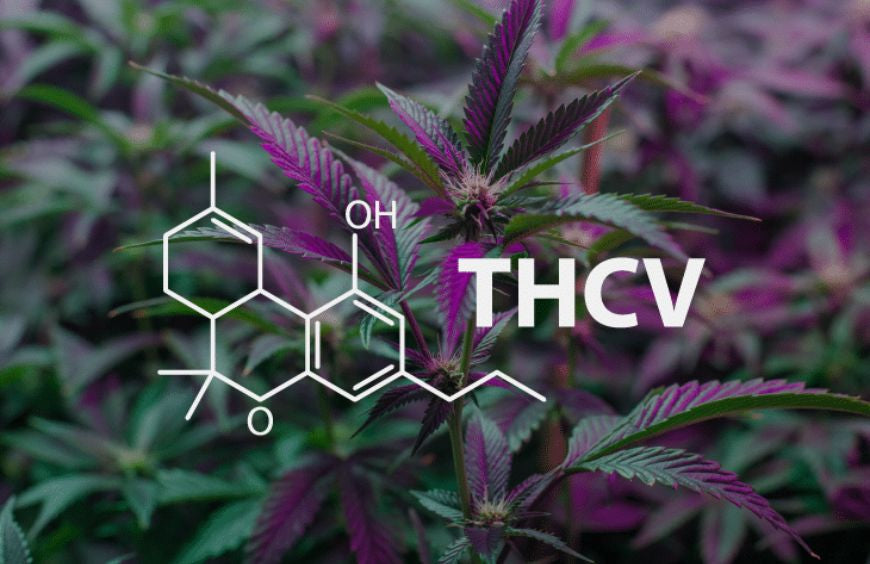
The molecular structure of THCV is similar to that of THC, with one key difference: THCV has a propyl side chain consisting of three carbon atoms, while THC has a pentyl side chain consisting of five carbon atoms. This difference may seem minor, but it has a major impact on how THCV interacts with the receptors in our body’s endocannabinoid system.
What are the differences between THC and THCV?
Some people may wonder if there are differences between THC and THCV because of the similarity in their names. Chemically, THCV differs slightly from THC, mainly in the structure of their side chains. THCV has a side chain of 3 carbon atoms, while THC has a side chain of 5 carbon atoms. However, both cannabinoids have double-bond isomers and 30 stereoisomers. Despite these similarities, there are significant differences between THCV and THC:
- The effects of THCV are described as intense and stimulating, but with greater mental clarity than THC. However, its effects do not last as long. Some believe that THCV produces these effects only by influencing the effects of THC, specifically by “overriding” them.
- Unlike THC, THCV is believed to suppress appetite, making it a potentially useful option for weight management. However, this remains a topic that requires further research.
- The boiling point of THCV is 220 °C, while that of THC is 158 °C. This is important information to keep in mind when vaporizing THCV-rich strains.
Does THCV cause a feeling of euphoria?
As mentioned earlier, the effects of THCV depend on the dose. When you consume high doses, you can indeed experience a pleasant high. The high induced by THCV is stimulating and provides greater mental clarity than that of THC. This makes it an excellent alternative for staying functional throughout the day while enjoying a pleasant high. THCV can also amplify certain aspects of the THC high, such as euphoria and mental stimulation. Additionally, it has been shown to mitigate the adverse effects associated with excessive THC consumption.
In addition, THCV does not cause food cravings, which may be appreciated by consumers looking to lose weight. However, this makes THCV-rich cannabis strains less suitable for people with certain eating disorders.
It's also worth noting that the effects of THCV kick in more quickly but last about half as long as those of THC. This makes it an ideal choice for people looking for a shorter experience.
What are the potential therapeutic properties of THCV?
Impact on Appetite and Blood Sugar Levels
A fascinating finding regarding THCV is its potential to influence appetite. Unlike THC, which is known to stimulate hunger, preliminary studies suggest that THCV may actually reduce appetite or promote a feeling of fullness. This could be beneficial for people who want to lose weight or control their calorie intake.
THCV has also been shown to have blood sugar-regulating properties. Preclinical studies suggest that it may help reduce insulin resistance and improve glucose tolerance, which could be beneficial for people with type 2 diabetes.
Neuroprotective potential
In addition to its effects on appetite and blood sugar levels, THCV also shows potential as a neuroprotective agent. This means it could help protect the brain from damage and degeneration.
This could have significant implications for the treatment of neurodegenerative diseases such as Parkinson's disease and Alzheimer's disease. Preliminary studies suggest that tetrahydrocannabivarin may slow the progression of these diseases by protecting neurons and reducing inflammation.
Anti-inflammatory and antioxidant effects
Like many other cannabinoids, including CBD and H4CBD, THCV has been shown to have anti-inflammatory and antioxidant properties. This could be beneficial in treating conditions such as chronic inflammation, oxidative stress, and potentially certain forms of cancer.
Energy and Mental Clarity
THCV is known to produce a stimulating effect that provides a boost of energy. This is one of the reasons why some people prefer it to other cannabinoids. Furthermore, unlike other cannabinoids that can cause confusion or “brain fog,” THCV is often reported to promote mental clarity.
The Legality of THCV in France: What Is Its Legal Status?
The question of THCV's legality in France comes up frequently and attracts a lot of attention. In France, THCV is considered legal for both sale and consumption. Its legal status differs from that of THC, which is illegal due to its pronounced psychotropic effects.
Although THCV can cause a powerful euphoric effect, it is not classified as a psychotropic substance, which sets it apart and exempts it from the legal restrictions that apply to THC. It is important to note that, even though THCV is legal, it must be consumed responsibly and in compliance with applicable laws and regulations.
It is also essential to remind consumers that, although THCV is legal, it is not without risks and should not be consumed without taking precautions. Each person may react differently to it, so it is best to start with low doses and increase them gradually to better assess your tolerance and the effects.
Future Outlook for THCV: What Opportunities Are on the Horizon?/h2>
Given the promising research on the potential therapeutic benefits of THCV, it is possible that its legal status may change in the future to allow for its use for medical purposes. However, this will depend on the progress of clinical studies and the willingness of health and government authorities to authorize its use.
It is also crucial to better understand the interactions between THCV and other cannabinoids found in cannabis, such as THC and CBD, in order to identify potential synergies between them and avoid adverse effects resulting from their combined use.
In summary, THCV is a fascinating molecule that could open up new therapeutic possibilities. However, its structural similarity to THC subjects it to legal restrictions in many countries. Research into its effects and the legislation governing its use will play a decisive role in its potential adoption as a medical treatment—rather than as a wellness cannabinoid. Because it is potentially psychotropic, it is likely to be restricted to healthcare professionals or classified as a controlled substance for the general public, which would have specific implications for the latter.
In contrast, H4CBD, which is CBD-based, is legal and can offer similar solutions in comparable situations, but this time in compliance with current legislation.