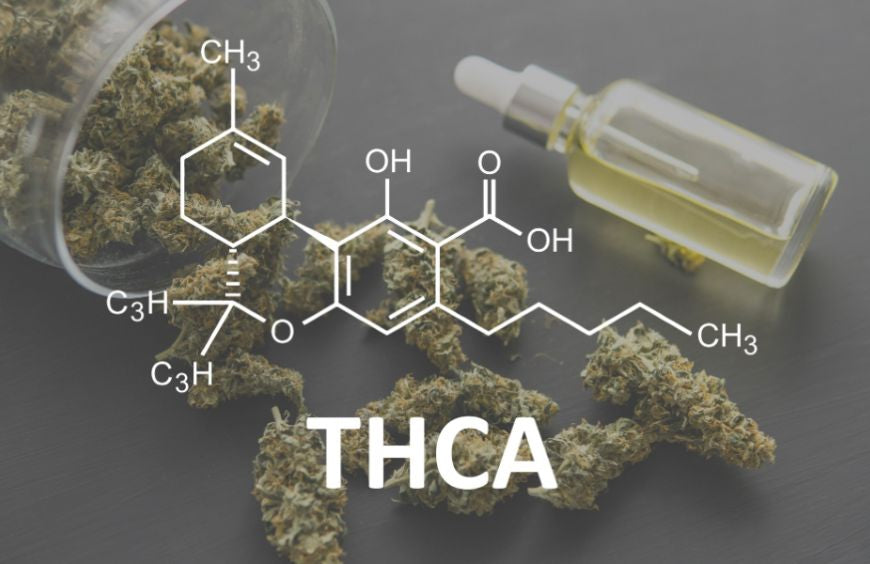
THCA, short for tetrahydrocannabinolic acid, is a compound naturally found in the cannabis plant. While most people associate cannabis with THC (tetrahydrocannabinol), which is the plant’s primary psychoactive compound, THCA is actually its acid precursor. Unlike THC, THCA does not produce significant psychoactive effects.
However, recent research has suggested that THCA may offer potential therapeutic benefits. Some studies have highlighted its anti-inflammatory, analgesic, neuroprotective, and antiemetic properties. These preliminary findings have sparked growing interest in the scientific and medical communities.
It should be emphasized that these potential benefits of THCA are still under investigation and require further research to be better understood and confirmed. Clinical trials and preliminary studies have provided promising indications, but it is important to note that these results are still preliminary.
In this article, we will explore THCA in greater detail, focusing on how it differs from THC, as well as the potential therapeutic benefits it may offer. However, it is essential to emphasize that the use of THCA for medical purposes must be governed by appropriate regulations and that further research is needed to corroborate the potential benefits of THCA.
THCA and Its Potential Benefits: A Promising Area of Research
THCA, or tetrahydrocannabinolic acid, is a compound naturally found in the cannabis plant. It is considered the acidic precursor to THC, the primary psychoactive compound in cannabis. While THC is known for its psychotropic effects, THCA does not produce any significant psychoactive effects. However, recent research has raised the possibility that THCA may have potential therapeutic benefits.
THCA is found primarily in fresh or unheated cannabis flowers. This is because it decarboxylates—that is, it loses a molecule of carbon dioxide—and converts to THC when exposed to heat, light, or oxygen. Because of this conversion, THCA concentrations are generally lower in cannabis products that have been heated or processed.
Although research on THCA is still limited, some preliminary studies have suggested potential therapeutic properties. THCA has been linked to anti-inflammatory, analgesic, neuroprotective, and antiemetic effects. These properties are generating growing interest in the scientific and medical communities, as they could pave the way for new treatment options for a wide range of medical conditions.
It is important to note that the potential benefits of THCA are still being studied and require further research to be better understood and confirmed. Preliminary results are promising, but it is essential to conduct rigorous clinical trials and in-depth studies to fully evaluate the efficacy and safety of THCA as a therapeutic agent.
Interest in THCA has also grown because of how it differs from THC. While THC is responsible for the psychoactive effects associated with cannabis use, THCA does not produce these effects. This means that people seeking to benefit from the potential therapeutic properties of cannabis may consider using THCA-rich products without experiencing the unwanted effects of THC.
Formation of THC from THCA
The formation of THC from THCA is an essential process for understanding the differences between these two cannabis compounds. Decarboxylation is the key mechanism that enables this conversion.
Decarboxylation is a natural process that occurs when THCA is exposed to heat, light, or oxygen. It is through this exposure that THCA undergoes decarboxylation—that is, a molecule of carbon dioxide (CO2) is released, causing THCA to be converted into THC.
Heat is the most common factor used to trigger the decarboxylation of THCA. When the cannabis plant is heated—whether through combustion during consumption or through exposure to high temperatures during cooking—the heat causes CO2 to be released, thereby converting THCA into THC.
In addition to heat, light and oxygen can also play a role in the decarboxylation process. Prolonged exposure to light and oxygen can contribute to the gradual breakdown of THCA into THC. This is why it is recommended to store cannabis products under appropriate conditions, away from light and oxygen, to preserve the THCA content.
Once converted to THC, this compound is responsible for the well-known psychoactive effects of cannabis. Unlike THCA, THC can bind to the cannabinoid receptors found in the human body’s endocannabinoid system, resulting in a variety of effects on the central nervous system. It is this psychoactive property of THC that often attracts the interest of recreational cannabis users.
Differences Between THCA and THC
The differences between THCA (tetrahydrocannabinolic acid) and THC (tetrahydrocannabinol) are key to understanding the effects and uses of these two cannabis compounds. While THC is known for its psychoactive effects, THCA does not produce the same effects.
THC is responsible for the psychoactive effects associated with cannabis use. When it binds to cannabinoid receptors in the human body’s endocannabinoid system, it causes changes in perception, mood, and cognition. This can result in feelings of well-being and euphoria, altered perception of time and memory, as well as relaxing or stimulating effects, depending on the cannabis strain and the dose consumed.
In contrast, THCA does not produce significant psychoactive effects. Due to its chemical structure and limited bioavailability, THCA does not bind effectively to the cannabinoid receptors of the endocannabinoid system, which explains the absence of psychotropic effects observed when it is consumed.
However, despite the absence of psychoactive effects, THCA has attracted growing interest due to its potential therapeutic properties. Preliminary studies have suggested that THCA may have anti-inflammatory, analgesic, neuroprotective, and antiemetic effects. This makes it a promising area of research for the development of new medical treatments.
The potential therapeutic properties of THCA may be attributed to its interaction with other biological systems in the body, such as the immune system and the endocannabinoid system. It is important to note that research on THCA is still limited, and further studies are needed to better understand and confirm these therapeutic properties.
Potential Benefits of THCA
THCA (tetrahydrocannabinol) has attracted growing interest due to its potential therapeutic benefits. Recent studies have suggested that THCA may have anti-inflammatory, analgesic, neuroprotective, and antiemetic properties, thereby opening up new possibilities in the medical field.
Some studies have examined the anti-inflammatory effects of THCA and have shown encouraging results. THCA may play a role in modulating the body’s inflammatory response, thereby reducing inflammation in certain disease states. This could have significant implications for the treatment of chronic inflammatory diseases such as arthritis, Crohn’s disease, and multiple sclerosis.
In addition, THCA has also shown potential analgesic properties in preliminary studies. It may help alleviate pain by interfering with the body’s pain signaling pathways, thereby offering a potential alternative to conventional pain relievers.
With regard to neuroprotective properties, preliminary research suggests that THCA may have a protective effect on nerve cells. This could have implications for the treatment of neurological disorders such as Parkinson’s disease, amyotrophic lateral sclerosis (ALS), and traumatic brain injury.
In addition, THCA has been studied for its antiemetic potential—that is, its ability to reduce nausea and vomiting. This may be beneficial for cancer patients undergoing treatments such as chemotherapy, which can cause unwanted side effects such as nausea and vomiting.
However, it should be noted that the current findings are preliminary and that further research is needed to confirm the potential benefits of THCA. Although preliminary studies have provided promising evidence, it is essential to conduct rigorous clinical trials to fully evaluate the efficacy and safety of THCA as a therapeutic agent. Furthermore, it is important to understand the specific mechanisms of action of THCA and to determine the optimal doses for various medical conditions.
Potential Uses of THCA
THCA (tetrahydrocannabinol) offers promising prospects as a therapeutic agent, which has led to research into its potential medical applications. Practices involving the consumption of fresh cannabis flowers or THCA-rich extracts have been studied with the aim of harnessing its purported beneficial properties.
Some consumers have adopted the practice of consuming fresh, unheated cannabis flowers in order to maximize the THCA content. Fresh cannabis flowers naturally contain high levels of THCA before it decarboxylates into THC when heated. Consuming these unheated flowers is considered a potential way to enjoy the supposed benefits of THCA without the psychoactive effects associated with THC.
THCA-rich extracts, such as tinctures, oils, or concentrates, are also used in certain medical practices. These extracts are made from cannabis strains specifically cultivated to contain high concentrations of THCA. They can be administered sublingually—by placing a few drops under the tongue—or by incorporating them into food or beverages.
It should be noted that the use of THCA for medical purposes requires special attention and must be governed by appropriate regulations. Patients interested in using THCA for therapeutic purposes should consult a qualified healthcare professional for personalized advice. The appropriate amount, route of administration, and dosage must be determined based on individual needs and specific medical conditions.
In addition, it is important to note that regulations governing the use of cannabis and its derivatives vary from country to country. In many places, access to medical cannabis is regulated and requires a prescription or appropriate medical authorization. It is essential to comply with the laws and regulations in effect in your area before considering the use of THCA for medical purposes.