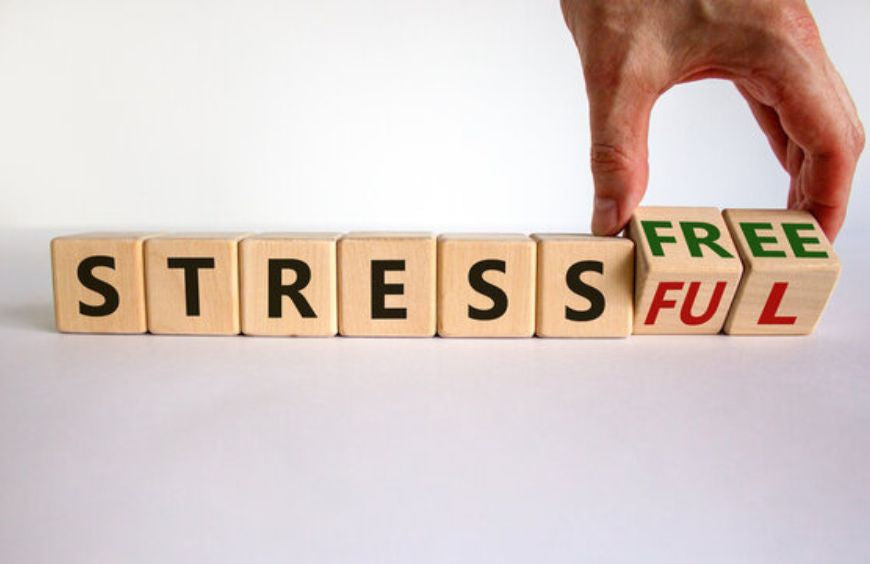
All over the world, stress is a source of overwhelming concern for the population. Not everyone is aware of this. It is a medical condition that should not be taken lightly at all. Even if the consequences of stress are not necessarily dire, it is nonetheless a debilitating condition. Yes, it is indeed an officially recognized psychological disorder. Recently, the coronavirus pandemic has sent shockwaves through nations. It has brought in its wake enormous material losses, but above all, human losses. In Europe, the ranking of the most stressful countries has been turned upside down. A recent study examined this topic.
Key Information to Know About the Study
A player in the CBD market recently conducted an interesting study on the most stressful countries in Europe. To arrive at objective results free of personal bias, specific criteria and a scientific method had to be developed. As a first step, criteria for measuring stress and depression had to be defined. The experts who conducted this study identified the following specific variables: level of melancholy, degree of satisfaction, degree of anxiety, and, finally, actual weekly working hours. These few variables—which are both qualitative and quantitative—already provide a general overview of the trends in each country.
For statistical analysis, the experts added appropriate indices to calculate an average score out of 100. To everyone’s surprise, the study’s initial results reveal some intriguing data. Ireland, a relatively peaceful and socially stable country, ranks among the ten most stressful countries in Europe. After crunching the numbers and assigning scores for each established criterion, Ireland posted a surprising score of fifty out of one hundred.
The Case of Ireland
A few decades ago, Ireland ranked well below the average for working hours across Europe. And yet, in recent years, the Irish population has been suffering increasingly from chronic stress and constant anxiety. Several studies, including some conducted by Eurostat, show that stress levels in Ireland affected more than 10% of the population. To date, these staggering figures have continued to rise inexorably.
In early 2017, the Irish government had already highlighted this alarming stress-related problem. According to these authorities, a campaign to raise public awareness about the serious threat of workplace stress was necessary. Other authorities, this time at the European level, also conducted their own surveys. They found that 30% of employees in companies were experiencing workplace distress. With these results, Ireland ranks among the top three out of 15 European countries surveyed.
To calm tensions and alleviate these figures, the Irish government has taken steps. In particular, it launched a website entirely dedicated to supporting these workers struggling in the job market. A complex support system was built around the workers to help them thrive in the workplace and alleviate their distress. This ambitious program, full of good intentions, could have had a positive outcome. Unfortunately, it was at that very moment that a devastating blow disrupted this well-organized effort. COVID-19 did nothing to improve the situation. On the contrary, it fostered isolation, social distancing, marginalizing behaviors, and a worsening of stress levels that were already out of control.
The Case of Greece
Unsurprisingly, Greece unfortunately still tops the rankings, with more than 60% of the population suffering from chronic stress. As for the figures related to the average rate of depression among the samples studied, more than 8% of respondents reported experiencing it. Greece has consistently shown some weakness in the social welfare of its population. Indeed, the country’s disastrous economic situation does nothing to help prioritize these issues. While on the surface Greece appears to be a dream tourist destination—with its ancient cities, vast harbors, and postcard-perfect scenery—a very different reality lies hidden behind this facade.
A little further away from the festivities, the hustle and bustle, and the tourist circuits, there is open-air poverty. The streets are poorly maintained, sanitation is lacking, and the residents’ faces betray their cries of despair. Despite the government’s repeated promises of economic development, the people remain mired in misery and poverty. In such a dire situation, it is no surprise that overall stress levels are reaching record highs.
The Case of Denmark
Here, too, the figures aren’t all that surprising. Denmark has always been a stable nation, a true role model for other countries. It easily scores a 20 out of 100 for the average stress level among the Danish population. However, the responses reveal mixed interpretations. Although only 5% of respondents experience occasional feelings of stress, more than 15% report feeling apathetic most of the time. These findings are quite contradictory. Not experiencing true happiness and not feeling unwell is almost typical of this Nordic nation. The Danish mindset is quite surprising. Recently, psychologists in the country have been advising patients plagued by these unhealthy thoughts to simply “do nothing.”
This theory recommends that people take time for themselves: go for a walk, gaze at the stars, sit on a bench, and let their minds wander. According to its proponents, this helps clear the mind, avoid overthinking, relieve tension, and better manage one’s emotions. Of course, these figures—derived from studies conducted based on specific criteria—do not necessarily reflect reality. In fact, it’s important to note that this reputation as a “model student” isn’t entirely unquestionable either. Recently, sociology researchers in Copenhagen conducted their own investigations to lend more substance and tangible truth—backed by facts and social phenomena—to these somewhat watered-down studies. According to them, a less flattering truth lies behind this façade.
Understanding How Stress Works to Better Combat It
After these various waves of the coronavirus pandemic, it is not surprising to see an impact on people’s mental health. Stress affects people on many levels. Some people are more affected than others. The manifestations and symptoms therefore differ from one individual to another. Several government agencies agree that there are key indicators for identifying the severity of stress. These include insomnia, smoking, isolation, alcohol abuse, and violent behavior.
This prolonged health crisis, which has lasted more than two years, has severely disrupted the population’s psychological stability. COVID-19 has forced us to limit our contact and interactions. People were exercising less and staying cooped up at home. This stressful environment was exacerbated by rising unemployment, the fear of another lockdown on the horizon, various restrictive measures, and, above all, the dread caused by the unpredictability of the coronavirus.
Over time, experts have become better at identifying the signs of stress. Generally, recurring migraines and difficulty falling asleep were telltale signs. The body weakens, and the feeling of anxiety becomes more overwhelming. People suffering from stress feel helpless, lacking in confidence, and paranoid.
For example, you can try anti-anxiety medications or generic stress-relief treatments at your own risk. Not all medications are created equal, and in most cases, they come with unpredictable side effects. This adds further discomfort to your misfortune, which can exacerbate your stress. Fortunately, holistic and natural solutions exist to soothe these destructive thoughts. Try CBD and discover its benefits for your mental health and overall well-being.
Conclusion
This ranking of the most stressful countries in Europe has revealed several truths. First of all, stress is unpredictable and can affect economically stable countries just as much as less prosperous ones. This is a surprising observation that helps us gain some perspective on our own situation. In fact, stress is triggered without you even realizing it by unavoidable forces such as the coronavirus or by environmental factors like the workplace. To combat this scourge, we must seek out the most reliable and least restrictive solutions. With CBD’s dominance in the market, it might be time for you to experience what makes this compound so successful. Millions of consumers have already taken the plunge. User reviews and studies on the subject demonstrate the effects of this elixir on everyday ailments like stress. Don’t wait—try it for yourself.