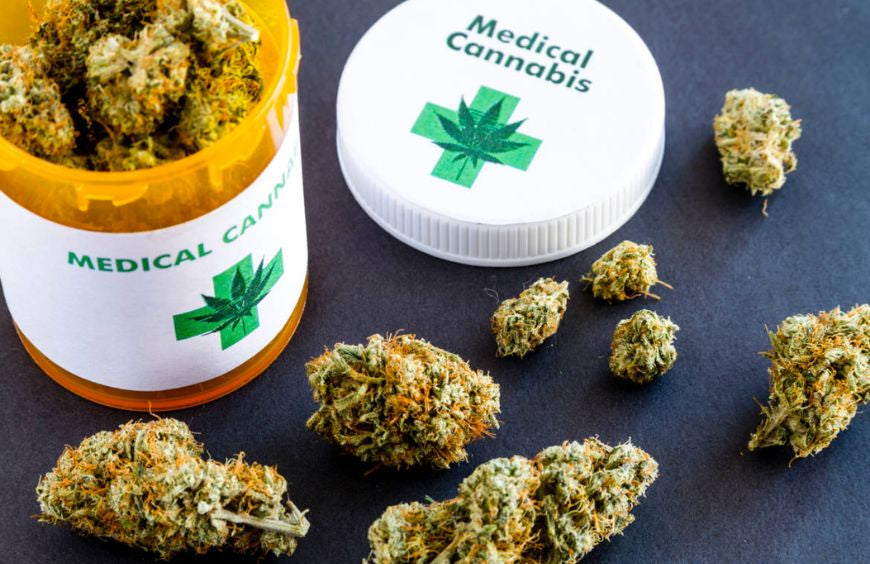
Medical cannabis is attracting growing interest as a potential therapeutic adjunct in the medical field. Its active components, such as tetrahydrocannabinol (THC) and cannabidiol (CBD), may offer significant benefits in relieving the symptoms of various conditions. Although preliminary research has suggested promising results, it is important to note that the actual effectiveness of medical cannabis and its potential benefits have yet to be confirmed by more in-depth studies.
This article explores the potential of medical cannabis as a complementary treatment, focusing on a few specific areas. It is important to note that the benefits discussed are subject to further study and require close monitoring under the supervision of healthcare professionals.
What is medical cannabis?
Medical cannabis, also known as medical marijuana, refers to the use of certain parts of the cannabis plant for therapeutic purposes. It differs from recreational cannabis use, in which the plant is used for its psychoactive effects. Medical cannabis focuses instead on the plant’s active compounds, such as THC (tetrahydrocannabinol) and CBD (cannabidiol), which are believed to have therapeutic properties.
The main ways to use medical cannabis include:
- oral consumption (in the form of oils, capsules, or infused foods),
- inhalation (through smoke or vapor)
- and topical application (in the form of creams, balms, or patches).
Each method of administration has its own advantages and disadvantages, and the choice often depends on the patient's preferences and the nature of their medical condition.
The active compounds in cannabis interact with the body’s endocannabinoid system, a complex system that plays a key role in regulating various physiological processes. These interactions can influence functions such as pain, inflammation, mood, appetite, and sleep.
It is important to note that medical cannabis is often prescribed as part of a comprehensive, individualized treatment plan, in collaboration with qualified healthcare professionals. Dosages, THC-to-CBD ratios, and routes of administration are carefully tailored to each patient’s specific needs and medical condition.
It should be noted that the use of medical cannabis is governed by strict regulations in many countries. Patients must obtain the appropriate medical authorization and comply with applicable laws and regulations in order to access medical cannabis legally.
Is medical cannabis legal?
The legality of medical cannabis varies considerably from country to country and even within different jurisdictions. While some countries have enacted laws that permit the use of cannabis for medical purposes, others maintain strict restrictions or prohibit it entirely. It is therefore essential to understand the laws in effect in your country or region to determine whether medical cannabis is legal.
In many countries, specific legal frameworks have been established to regulate the use of medical cannabis. These frameworks may include strict requirements, such as obtaining the appropriate medical authorization, participating in monitoring and follow-up programs, or having limited access to specific products. Government agencies often regulate the production, distribution, and prescription of medical cannabis to ensure that safety and quality standards are met.
Some countries have adopted a more liberal approach to medical cannabis, allowing broader access and offering a wider variety of treatment options. In these cases, medical cannabis can be used to treat a wide range of conditions, from chronic pain to neurological or psychiatric disorders. However, even in these countries, specific regulations often govern the use, possession, and production of medical cannabis.
It is important to note that even when medical cannabis is legal, there may be restrictions on how it can be used, permitted dosages, and eligible medical conditions. Furthermore, the legal status of medical cannabis may change over time, as regulations are subject to revisions and policy changes.
What are the benefits of using medical cannabis?
Before exploring the potential benefits of using medical cannabis, it is important to note that these benefits are based on preliminary studies and promising observations. Medical cannabis is attracting growing interest as a potential therapeutic adjunct, particularly in the management of chronic pain. However, it is essential to continue conducting in-depth research to confirm these observations and fully understand the potential benefits and risks of medical cannabis.
Potential Pain Management
Medical cannabis could potentially alleviate chronic pain associated with conditions such as fibromyalgia, arthritis, and neuropathic pain. Preliminary studies suggest that it may provide effective relief where other treatments have failed, which could potentially improve patients’ quality of life.
Potential reduction in inflammation
Ongoing research is exploring the anti-inflammatory properties of medical cannabis. By acting on the immune system’s cannabinoid receptors, it could potentially help reduce inflammation associated with autoimmune diseases such as multiple sclerosis or rheumatoid arthritis.
Potential Management of Chemotherapy Symptoms
Preliminary clinical trials suggest that medical cannabis may potentially reduce the side effects of chemotherapy—such as nausea, vomiting, and loss of appetite—in cancer patients. This could potentially improve their quality of life during treatment.
Potential Treatment for Neurological Disorders
Preliminary studies suggest that medical cannabis may potentially help reduce seizures in patients with epilepsy that is resistant to traditional medications. In addition, it is also being studied for its potential in the treatment of Parkinson's disease and amyotrophic lateral sclerosis (ALS).
Potential Relief from Psychiatric Disorders
Some research suggests that medical cannabis may potentially provide symptom relief for patients with psychiatric disorders such as anxiety, depression, or post-traumatic stress disorder (PTSD). However, it is important to note that its use must be closely monitored and tailored to each patient, as it could also exacerbate certain psychiatric disorders in some people.
Potential improvement in quality of life
Medical cannabis could potentially improve the quality of life for patients with chronic illnesses by reducing debilitating symptoms and allowing them to regain a sense of normalcy. This could result in potential improvements in appetite, sleep, mood, and overall functioning.
A promising new study suggests the potential benefits of medical cannabis
A new study published in *BMJ Supportive & Palliative Care* indicates that products with a balanced concentration of the active ingredients—tetrahydrocannabinol (THC) and cannabidiol (CBD)—appear to be the most effective for pain relief.
Currently, only hospital-based medical specialists can prescribe cannabis-based medications through the National Health Service (NHS), and only for a few specific conditions, such as:
- rare and severe epilepsy,
- nausea or vomiting caused by chemotherapy,
- as well as muscle stiffness caused by multiple sclerosis (MS).
The researchers studied 358 adults with cancer over a period of three and a half years. About a quarter of the patients used THC-dominant products during the study, 38% used THC:CBD-balanced medications, and 17% used CBD-dominant products. The patients’ pain intensity, symptoms, total number of medications taken, and daily morphine consumption were then monitored quarterly for one year.
The study found that at three, six, and nine months, there was a statistically significant decrease:
- the intensity of the most severe and moderate pain,
- the overall severity of pain,
- as well as the impact of pain on daily life.
The researchers concluded that the data suggest a potential role for medical cannabis as a safe, complementary treatment option for cancer patients who do not achieve adequate pain relief with conventional pain medications, such as opioids.
These findings come as a clinical trial of an oral spray containing cannabinoids to treat glioblastoma (GBM) —the most common type of high-grade brain tumor in adults—has been launched at the Leeds Teaching Hospitals NHS Trust and the Christie NHS Foundation Trust in Manchester.
The trial, funded by The Brain Tumor Charity, aims to investigate whether the combination of nabiximols (a cannabis-based medication) and chemotherapy can prolong the lives of people with recurrent GBM. It will recruit more than 230 patients with GBM from 14 NHS hospitals in England, Scotland, and Wales in 2023.
Conclusion
In conclusion, the use of medical cannabis as a complementary treatment may offer potential benefits in various fields of medicine. A promising new study, published in *BMJ Supportive & Palliative Care*, highlights the beneficial effects of medical cannabis with a balanced THC-to-CBD ratio on pain management in cancer patients.
The results of this study suggest that medical cannabis could provide effective relief where other treatments have failed, thereby improving the quality of life for patients suffering from chronic pain. Furthermore, the anti-inflammatory properties of medical cannabis and its potential to alleviate the side effects of chemotherapy or to treat neurological and psychiatric disorders offer promising prospects for its use as part of a complementary therapeutic approach.
It is essential to emphasize that the use of medical cannabis must be supervised by healthcare professionals and tailored to each patient. Further research, rigorous clinical trials, and appropriate regulation are needed to better understand the benefits, risks, and limitations of medical cannabis.
However, the promising results of this study and other ongoing research are paving the way for new treatment options for patients who do not respond adequately to conventional treatments. Medical cannabis could thus play an important role in improving the quality of life for patients with various medical conditions.
In summary, although there is growing interest in the use of medical cannabis as a complementary treatment, it is crucial to continue research and promote a responsible and regulated approach. Harnessing its therapeutic potential in a safe and effective manner could offer new solutions to provide relief for patients and improve their overall well-being.