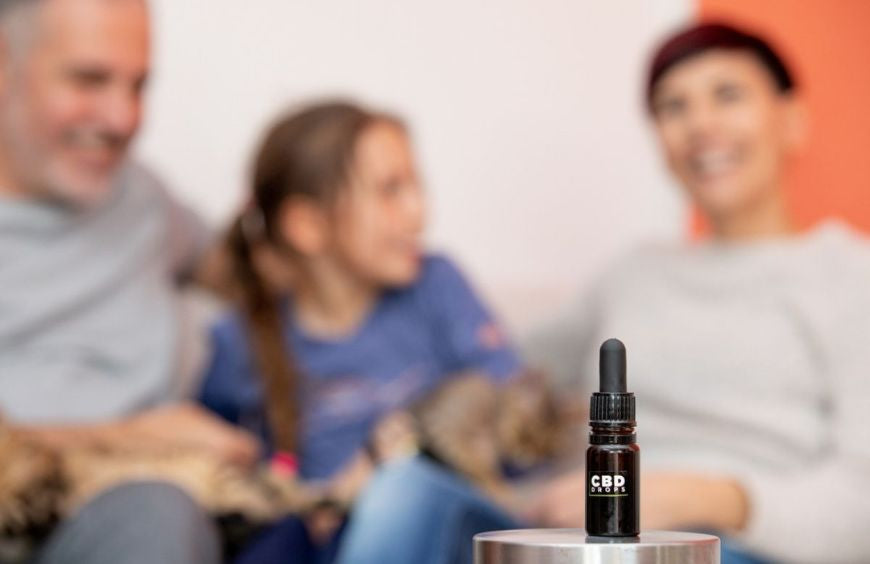
There are many online reviews discussing the potential benefits of CBD for children. These testimonials come mainly from parents who are concerned with improving their children’s well-being. It is also believed that CBD may help children suffering from school phobias, anxiety, ADHD, or sleep disorders.
The case of Charlotte Figi in 2013, who had Dravet syndrome, also received media attention in the United States. Her parents reported that she had fewer seizures after using medical cannabis rich in CBD. However, many people still wonder whether this cannabinoid is safe for children. We’ll explore this in detail in this article.
What is CBD?
CBD, or cannabidiol, is a molecule in the cannabinoid family. Like THC, it is an active compound found in the cannabis plant. It is important to note that there are more than 100 cannabinoids, including CBD and THC. However, CBD is present in smaller quantities than THC, largely due to production practices over the past few decades. Since THC is more sought after for its recreational effects, cannabis seeds circulating on the black market contain higher levels of THC.
However, these days, as the benefits of cannabis are becoming more widely recognized, strains are being bred specifically to contain high levels of CBD. As a result, it is possible to find hemp plants containing more than 6% CBD.
How does cannabidiol work in the body?
Before discussing the beneficial effects of CBD on the body, it is important to understand how this substance affects our bodies. CBD interacts with the human nervous system through the endocannabinoid system. The endocannabinoid system, also known as the ECS, is actually a vital network of receptors, molecules, and enzymes that ensures the body’s physiological balance and maintains its vital functions:
- digestion,
- thesis,
- metabolism,
- stress and mood regulation.
The only receptors known to date are the CB1 and CB2 receptors:
- CB1 is found primarily in the brain, heart, vascular system, reproductive system, lungs, intestines, and muscles,
- CB2 is found primarily in the immune system, the spleen, the liver, the skin, and the bones.
In short, CBD sends signals to cells via neurotransmitters that actively stimulate the CB1 and CB2 receptors. Depending on the target and the message sent, CBD may help regulate pain, inflammation, anxiety, sleep, appetite, and even mood. Finally, you should know that cannabinoids affect the body’s receptors in different ways.
What are the benefits of CBD?
It’s tempting to give your child a few drops of CBD oil because cannabidiol is said to have beneficial relaxing properties, particularly when it comes to sleep and mood. It is, in fact, a cannabinoid derived from the cannabis plant, which is legal in France because it has no psychoactive effects.
The potential benefits of CBD are the subject of increasingly rigorous research, particularly studies conducted by academics. This research has confirmed the sedative properties of the CBD molecule. Similarly, studies have demonstrated the efficacy of cannabidiol, which could allow it to be incorporated into certain treatments, particularly for epilepsy. In France, a pilot study on the therapeutic effects of cannabis is underway to promote the use of the cannabis plant in healthcare settings through prescriptions by medical professionals.
For children, however, scientists have not yet reached a clear conclusion regarding the potential benefits of CBD, even though the topic is beginning to garner interest in the United States. To date, no scientific study has been able to determine the effectiveness of cannabidiol use by minors. The same is true for pregnant women and animals.
In California, children like Charlotte, who have Dravet syndrome, are being treated with CBD. This severe form of epilepsy may be alleviated by high doses of the compound. For reference, the Professional Cannabis Association recommends that adults not exceed 70 mg per day to avoid side effects, particularly drowsiness.
Is CBD legal in France?
The substance banned in many countries is none other than THC, which has psychoactive effects. This is not the case with CBD, which can be purchased and consumed in many forms. Consequently, the sale of CBD has been legal in France since the Ministry of Health’s announcement in November 2017. The reason for this decision is that the substance has no psychotropic effects and is neither addictive nor toxic.
Why should you keep CBD out of children's reach?
It’s important to note that quantity and quality can vary from one brand to another. In the United States, a study found that CBD gummies for children were being marketed to help with sleep and anxiety. Researchers revealed that for some brands, the dosage was much higher than what was listed on the label. Consumers are unaware of the actual concentrations in the product. This is not the only study to have made these findings.
Each year, approximately 500 children under the age of five are also admitted to the hospital after ingesting toxic substances. Despite regulatory approval, users must remain vigilant and ensure that children are not exposed to CBD products.
In fact, while there is no evidence that CBD is inherently dangerous to children, very little research has shown that it offers any benefits. Consequently, experts advise parents not to expose children to the substance.
Although CBD is not life-threatening if accidentally ingested, even small amounts can cause toxicity. One study found that children showed slight traces of the substance after three weeks of ingesting hemp seed oil. It’s important to note that hemp seed oil is less potent than CBD but can still cause symptoms such as agitation, impaired coordination, and even seizures.
Furthermore, CBD products can be harmful if taken with other supplements. CBD is broken down in the liver and, like other supplements, can ultimately speed up or slow down the absorption of other ingested substances and affect your child’s health (if those other substances are important to your child’s health).
What can consumers do?
Consumers should buy products with child-resistant packaging to prevent children from ingesting potentially harmful substances.
Before selling, CBD sellers must ensure that their products comply with packaging requirements, including:
- the product name,
- labeling,
- the dosage,
- health warnings,
- the purity of CBD,
- all the ingredients,
- expiration dates,
- and storage conditions.
Current standards stipulate that child-resistant packaging must be impossible for 80% of children under the age of five to open, according to BSI. Child-safe CBD packaging is available in a variety of formats, such as jars, bottles, and containers with flip-top lids. The latter are often too complicated for children because the user must push or press while turning the lid.
Another factor to consider when choosing a product is its appearance, because a product that appears to be intended for a younger audience—such as a toy or a bag of candy—may attract the attention of curious children.
What should you do if your child has ingested CBD?
In a fairly urgent situation, it is advisable to call emergency medical services or go directly to the nearest hospital. Healthcare professionals will be able to assess the situation, make a diagnosis, and provide the appropriate care.
Finally, it is important to remember to keep all CBD-containing products out of the reach of children. In addition, CBD products can vary in terms of concentration and effects. It is therefore essential to use them only as directed by the manufacturer and to consult a healthcare professional if necessary.
Once again, for any emergency or health issue related to CBD use, it is recommended that you consult a healthcare professional who can provide advice tailored to your situation.