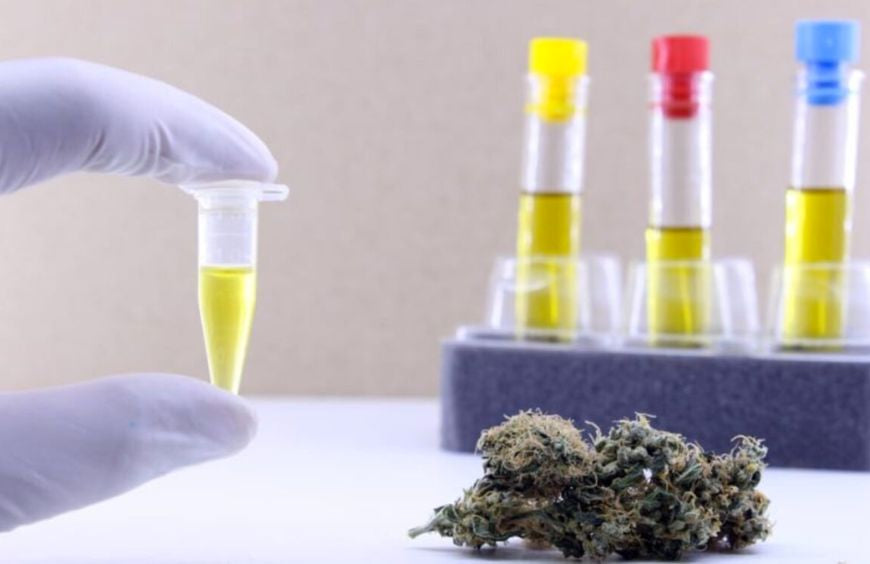
Cannabinoids such as THC linger in the body and are easily detectable in a drug test. CBD, on the other hand, is a substance that is rapidly eliminated; it does not linger at all and is quickly cleared from the body. This means that people who take CBD are unlikely to test positive for THC.
The only way to test positive on a screening test is to have a very high viral load.
What is a urine screening test?
In what situations is a urine test used?
There are many urine tests available to detect drug use. The one we are interested in is a urine screening test for cannabis. It can be administered after a positive saliva test. It determines whether a person uses cannabis, but does not prove addiction. It is used as a first-line test.
Unlike the saliva test, it is not recommended as a road safety prevention tool. Known for its reliability and speed, it is often used by hospitals, laboratories, and rehabilitation centers. However, recreational cannabis users can also obtain it, as can family members who want to monitor the use of their loved ones or children.
What is the purpose of a cannabis urine test?
The cannabis urine test detects the THC molecule only when it is present in the urine at a concentration greater than 50 ng/ml. This will detect the use of marijuana or any product containing THC. The test comes in the form of a test strip. Simply dip the strip into the urine. The result appears after 5 minutes. If the result is negative, it means there are no traces of THC in the urine. If it is positive, THC has been ingested. Note: Urine tests do not detect passive exposure (inhaling smoke from others).
How long can you test positive for cannabis?
Traces of THC can be detected in urine for varying lengths of time, depending on individual use and metabolism. On average, THC remains in urine for:
- 2 to 3 days with a single dose;
- 5 to 10 days for regular smokers (3 to 4 joints per week);
- 14–30 days for daily use;
- up to 40 to 60 days for some chronic users.
In addition, it’s important to know that THC use can make it detectable for up to 5 days. Unfortunately, this timeframe varies greatly from person to person depending on individual sensitivity, weight, and metabolism.
It’s also important to note that all CBD products contain THC. THC can therefore accumulate in the body and result in a positive test for cannabis. This is particularly true for flowers and all products intended for inhalation.
What factors affect how long CBD stays in the body?
Many factors can affect how long CBD remains in the body, including:
Consumption Pattern
CBD is absorbed differently depending on the method of consumption. When taken orally, it is metabolized in the liver before being released into the bloodstream. On the other hand, when inhaled, it enters the bloodstream directly.
Form of CBD
CBD comes in several forms. Tablets take longer to be eliminated from the body than other forms. This is because they must pass through the digestive system before being absorbed into the bloodstream.
Dosage
The higher the dose of CBD consumed, the longer it takes to eliminate it from the body. This is because CBD is metabolized in the liver, and a higher dose will result in more CBD being metabolized.
Person's age and weight
Younger, overweight people tend to eliminate CBD from their bodies more quickly than older, underweight people.
Presence of other medications in the body
When other medications are present in the body, they can interact with CBD and delay its elimination.
Frequency of use
If CBD is used regularly, it will remain in the body longer.
Type of hemp strain
Some strains of hemp have higher CBD levels than others. Strains with high CBD levels will remain in the body longer.
So how long does CBD stay in the urine?
There are few studies on how long CBD remains in urine. However, a 2016 American scientific study published in the *Journal of Pain Research* found that 15 participants consumed CBD-rich cannabis products—such as oils, capsules, and flowers—before taking a urine test for CBD.
Two hours after the administration of cannabidiol, urine samples from all 15 participants tested positive for CBD. The researchers continued to administer CBD to the participants for 6 days. After the final day of administration, the researchers found that cannabidiol levels peaked approximately 3 hours after ingestion. Furthermore, CBD was no longer detectable in the urine after 24 hours.
However, this suggests that a more frequent user will have to wait between 30 and 77 days for cannabidiol to clear from their urine, much like THC.
It should also be noted that the study is limited by the small sample size of participants, as well as by the lack of information on the CBD and THC concentrations in the cannabis administered to the patients. Although CBD is a legal substance, it warrants further research to determine the percentage of negative urine tests.
Is CBD detectable in a urine test?
Consuming CBD is legal in France and in most European countries. The law specifies that CBD is legal when it contains less than 0.3% THC (tetrahydrocannabinol).
THC is a substance responsible for the psychoactive effects of cannabis. When consumed in high doses, it can have serious health consequences for the user. It is classified as a drug and is routinely tested for. THC is detected in urine or saliva. It is the molecule that is tested for in a cannabis urine test.
Unlike THC, CBD is not classified as a controlled substance. The law confirms its legality, and it is not subject to drug control regulations. As mentioned above, cannabidiol is not what is being tested for in a urine test. Consequently, testing devices are not programmed to detect it. CBD is therefore not detectable in a urine test, even though it contains traces of THC.
Does CBD affect the results of drug tests?
Although CBD is quickly eliminated from the urine, it does not disappear from the body. Traces of this compound can be found in hair or saliva several days after ingestion. When used regularly in the form of oils, flowers, or concentrates, CBD tends to persist in adipose tissue for longer periods of time.
Traces of THC can be detected in some saliva-based drug tests and, in rare cases, may result in a positive test result. This detection is due to the accumulation of traces of THC—which some CBD products may contain—in adipose tissue. Consuming CBD products that comply with the legal THC threshold reduces the risk of a positive test result. That is why it is important to ensure that you are using legitimate products to avoid any issues during inspections.
How long does CBD stay in our bodies?
The length of time CBD remains in the body varies from person to person. It can range from a few hours to several weeks or months. Factors such as age, consumption, metabolism, frequency of use, and the amount of product consumed are taken into account.
CBD Dosage and Frequency
The amount you take really affects how long it takes your body to eliminate CBD. The relationship is simple: the higher the dose, the longer it takes to eliminate it. In regular users, CBD remains in the body longer. Frequent use leads to significant buildup in body tissues.
Impact of Consumption Habits and Metabolism
Depending on how it is used, the molecule’s half-life in the body can be significantly reduced. Taking CBD sublingually in oil form or applying it to the skin (as a cream) results in a shorter half-life. Since the molecule enters the bloodstream without passing through the digestive system, its effects become apparent within a few hours, acting quickly on the user.
Taking CBD orally or by inhalation allows you to gradually experience the product’s benefits. However, the molecule is eliminated just as slowly. This process is slowed by the fact that the substance must pass through the digestive system before reaching the bloodstream. The digestion time varies depending on each person’s metabolism. Some people are able to eliminate CBD quickly, regardless of how it is ingested. Others need several days to completely eliminate the product from their bodies.
Does CBD interact with other medications?
Yes, CBD can interact with other medications. This can speed up or slow down the time it takes for CBD to be eliminated from the body.
The first observed pharmacological effect of CBD was related to drug interactions. CBD is both a substrate and an inhibitor of CYP450 enzymes, so it can interfere with the metabolism of other drugs.
A study examined potential drug interactions between THC/CBD oral spray and CYP450 inducers and inhibitors at different dosing regimens. A study in healthy men showed that inducers of CYP3A4, an enzyme involved in CBD metabolism, significantly reduced peak plasma concentrations of CBD. In contrast, the CYP3A4 inhibitor nearly doubled the peak plasma concentration of CBD.
In summary, CBD is not intoxicating and does not cause the “high” associated with THC. It should be noted that there is no reliable way to test for the presence of CBD in the body, and most tests are not accurate. However, since CBD is legal, even if a test shows that your body contains CBD, you will not face any penalties.