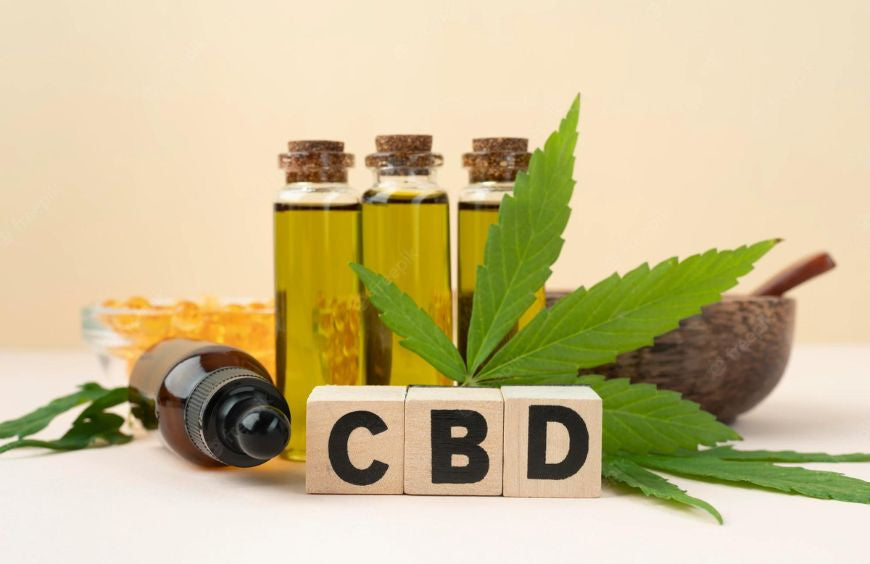
CBD continues to surprise people with its many beneficial effects on our well-being. Oils, teas, food, cosmetics, e-liquids… It now comes in a variety of forms. Given the amount of information available from brands and the lack of data on CBD use in France, many users who have tried CBD are completely confused about how to use it.
Whether you’re a first-time user or an experienced one, understanding the effects and uses of cannabidiol (CBD) can be a bit confusing. One of the most frequently asked questions is, “How do I find the right dosage?” This can be tricky, but there are a few guidelines you can use to help you figure it out. Let’s explore them together!
How to Choose Your CBD Dosage?
While much has been said about the benefits of CBD, very little has been written about its optimal dosage. To add to the confusion, unlike other natural health supplements, there is no set recommended daily intake (RDI) for CBD. This means there are no official dosage recommendations for CBD.
As a result, consumers often rely on dosage recommendations from the brands and companies from which they purchase their products. Or worse, from friends who offer “expert advice” based on their personal experience. However, keep in mind that certain factors must be taken into account when determining the ideal dose for each individual—these include:
Body weight
Taking cannabidiol is an excellent way to enjoy the benefits of the compound in an interesting and convenient way. However, it’s important to note that your body weight plays a significant role in determining your optimal cannabidiol dosage. If you know your weight, it will be easier for you to determine the correct dose and its effect on your body.
All supplements are dosed based on the user's body weight. It's easy to conclude that the higher the body weight, the higher the dose of CBD needed to feel a significant effect. As with most substances, heavier individuals would need more CBD to achieve the expected effects.
Metabolism
Metabolism plays an important role in determining the right CBD dosage. Everyone’s body is different. Regardless of weight, everyone has their own metabolism. Variations in body chemistry can lead to different effects when taking CBD. More specifically, two people of the same weight and height may experience the effects of this cannabinoid differently. In other words, the reason for taking this compound may be the same, and weight and other variables may be the same, but the person taking CBD may react differently.
In fact, each person’s metabolism affects the rate at which the body processes different doses of cannabidiol. Cannabidiol is therefore involved in regulating cellular homeostasis—the body’s ability to maintain balance. This is where dosage comes into play. If the dose is too low, CBD won’t work, and conversely, if the dose is too high, it won’t achieve the desired balance.
Therefore, due to genetic variation in enzymes, it is impossible to predict each individual’s metabolic response and, consequently, the appropriate dose for that person. Self-experimentation is the best way to determine the optimal amount of CBD. Since everyone’s metabolism can vary, you need to understand how your metabolism affects the speed and efficiency with which this molecule is absorbed.
Body Composition
Body composition is very important in determining the right CBD dose for each individual. It includes body fat percentage, muscle mass, and the ratio of waist circumference to body weight. This is because it affects the amount of cannabidiol absorbed by the body and the time it takes for the effects to be felt. Knowing your body composition will help you determine the optimal CBD dose for your needs. It is therefore important to be aware of changes in your body composition and to adjust your dose accordingly.
Age
Age is a very important factor when it comes to CBD dosage. As we age, our bodies change, and with them, our response to products like cannabidiol also changes. Age affects a person’s tolerance level and can determine the appropriate amount to consume. It is important to understand how age factors into determining the appropriate dosage of supplements, particularly CBD. In fact, it has been shown that the effects of CBD on people change with age. Based on this, it may be important to tailor cannabidiol to individual needs.
The medical condition
One of the main reasons for using CBD is to relieve various conditions. The most common ones are pain, headaches, inflammation, stress, and sleep disorders... It is used to relieve the pain associated with these conditions. The dose, of course, depends on the severity of the symptoms. Naturally, the CBD dosage used for chronic pain is not the same as that used for occasional aches and pains or sleep disorders.
The CBD dose may vary depending on the condition being treated. Different types of conditions require different doses based on the severity of the symptoms. For example, patients suffering from chronic neuropathic pain need a higher dose of CBD for pain relief than those who use CBD to improve their daily health and well-being.
According to CBD experts in their book *CBD: A Patient’s Guide to Medical Cannabis* , they recommend taking a step-by-step approach. To do this, they suggest starting with “microdoses,” “regular doses,” or “high doses,” depending on the type of symptoms, and increasing your CBD dose each week until you find your ideal dose.
CBD concentration
CBD content is measured in milligrams (mg), but most brands list it on the bottle as a concentration (%), which is the percentage of CBD in the product. The CBD dosage varies depending on the serving size, which refers to the amount of CBD contained in a single serving.
In fact, not all CBD oils on the market have the same concentration of cannabidiol. A numerical percentage is listed on the bottles: this is the CBD content. It may only be a few milligrams, but it’s important to take this into account, as it’s a key factor in the oil’s optimal effectiveness. Similarly, not all CBD-based products are of the same quality. Some are rich in all of the plant’s active compounds (cannabinoids, terpenes, flavonoids). This is known as full-spectrum CBD. Others contain only pure CBD, which is called broad-spectrum. What do these terms actually mean?
Key Points to Remember About CBD Dosage
Due to the lack of medical guidance, many people take CBD without establishing a regimen or assessing their CBD intake—which is essential for achieving the desired positive results. It is therefore important to first determine the theoretical dose based on body weight and certain indicators mentioned above. Next, assess how your body reacts to this amount of CBD and, if necessary, increase it gradually—one drop at a time—while keeping an eye on how you feel and the results you experience until you find the right CBD dosage for you.
Please note that what works for someone else may not work for you.
Conclusion
As you can see, everyone has their own ideal CBD dosage. Age, medical history, prior use of cannabinoids, and current medication use are all factors to consider when determining the right dosage. Although there is no risk of overdose, it’s important to start with a small amount of CBD and increase it gradually. Are you convinced but not sure which product to choose? We invite you to browse our store and find the one that best suits your needs.
So, if you're not sure how much CBD to take, our expert advisors can help you. They'll be able to recommend how to find the right dosage based on your needs.