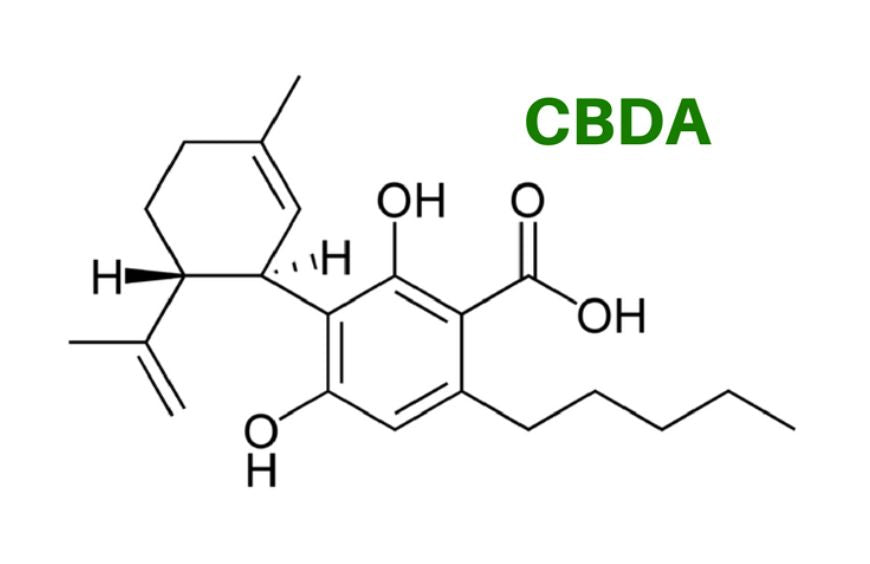
CBD (cannabidiol) has become the most popular acronym in the world of cannabis in recent years, even among those who were previously unfamiliar with THC (tetrahydrocannabinol). The rise in popularity of cannabidiol has led to the recognition of a “milder” form of cannabis that can be consumed in Europe. However, this focus on CBD has overshadowed all the other components of cannabis, such as CBDA (cannabidiolic acid).
CBDA is a compound found in the cannabis plant, among more than 120 molecules discovered in hemp. It joins the list that includes CBD, THC, CBG, and other active compounds that give the plant its properties, particularly its therapeutic ones. What makes CBDA unique is that it is the precursor acid form of CBD, playing an essential role in its production. However, cannabidiolic acid has been studied far less than CBD or THC, which limits the available information regarding its composition and effects.
This article aims to provide you with the available information on CBDA. We will take a detailed look at exactly what CBDA is and how it differs from other cannabinoids found in cannabis. In addition, we will discuss the potential benefits of CBDA and its current uses.
Although there is a lack of in-depth studies on cannabidiolic acid, preliminary research suggests that it may have anti-inflammatory, analgesic, anti-nausea, and anti-anxiety properties. In addition, cannabidiolic acid may interact with the endocannabinoid system in a manner similar to CBD, thereby offering potential health benefits.
Although CBDA is less well known than CBD, it deserves our attention as a potentially beneficial component of cannabis. By exploring its properties and uses, we can better understand the many benefits this plant has to offer.
Understanding CBDA: A Natural Compound Found in Cannabis
CBDA, or cannabidiolic acid, is a natural, non-psychoactive compound produced by the cannabis plant. Unlike CBD, CBDA was discovered more recently, in 1996, although research on CBD began as early as the 1940s.
Cannabidiolic acid is found primarily in raw, unprocessed cannabis plants, particularly in the plant’s trichomes. It is considered the precursor—or acidic form—of CBD. It is important to note that CBDA can only be found in the raw cannabis plant and is present in significant quantities.
When cannabis is processed for commercial sale, CBDA, like other cannabinoids, undergoes a transformation. When the plant is heated, the acid compounds—including cannabidiolic acid—break down into new chemicals, notably CBD. This process, called decarboxylation, is responsible for converting CBDA into CBD while releasing carbon dioxide (CO2).
It should be noted that most of the neutral forms of cannabinoids, including CBD, are more popular with the general public than their acidic forms. This is because the acidic forms are often converted into neutral forms when cannabis is consumed or processed. Smoking, vaporizing, or cooking with CBDA therefore results in its conversion to CBD.
In living, growing cannabis plants, CBD is found in limited quantities. Therefore, to obtain significant levels of CBD, growers must convert CBDA into CBD by drying or heating the plant. What cannabidiolic acid and CBD have in common is that they do not produce any euphoric effects, unlike THC. As a result, they can be consumed throughout the day without interfering with daily activities.
It is important to note that all cannabinoids, including cannabidiolic acid and CBD, affect the body by activating neurotransmitters and modulating the nervous system’s responses. They also play a role in regulating many other bodily systems.
Potential Benefits of CBDA
Due to the preconceived notion that the acidic forms of cannabinoids offer no benefits, we have far less information about cannabidiolic acid than we do about THC or CBD. As a result, very few serious studies have been conducted on cannabinoids such as CBDA to date.
However, this trend is changing, and research is beginning to emerge on the potential benefits of CBDA for the human body. But what are these benefits?
The earliest research dates back to 2008, when some researchers observed that CBDA had a structure very similar to that of commonly used nonsteroidal anti-inflammatory drugs (NSAIDs), such as acetaminophen and ibuprofen. They wondered whether cannabidiolic acid worked in the same way as these NSAIDs. Ultimately, they discovered that cannabidiolic acid inhibits COX-2, the same chemical in the body that is inhibited by NSAIDs.
However, CBDA isn't just used to reduce inflammation. Studies have also shown that it can be effective in treating nausea and anxiety, with marked similarities to CBD. In fact, CBDA may even be more effective than CBD in treating these symptoms.
Furthermore, cannabidiolic acid has been shown to be significantly more effective than CBD at activating the serotonin receptor, thereby reducing nausea and anxiety. This effect is particularly pronounced in chemotherapy patients who use ondansetron (OND) to treat nausea.
In conclusion, CBDA is believed to have anti-inflammatory and anti-nausea properties and may potentially provide relief from the unpleasant symptoms associated with cancer.
The scientific outlook for CBDA is very promising. As this product becomes more popular among consumers and patients who wish to treat themselves with cannabidiolic acid, more studies will be conducted to deepen our understanding of its effects and applications.
CBDA Legislation in France
Current legislation in France and throughout Europe permits the legal consumption of cannabidiolic acid (CBDA). Under European Union regulations, products containing cannabidiolic acid with THC levels below 0.2% are considered legal.
This means that products containing cannabidiolic acid—such as extracts, oils, or infusions—can be legally purchased and consumed in France. However, it is important to note that the THC content must be strictly controlled to comply with the law.
It is also essential to comply with applicable regulations and to verify the source and quality of CBDA-based products. It is recommended to purchase products from reputable manufacturers and retailers that adhere to quality and safety standards.
It is important to note that laws and regulations may vary from one country to another. It is therefore essential to familiarize yourself with the specific regulations of the country where you are located before consuming products containing cannabidiolic acid.
Practical Tips for Reaping Its Benefits
There are different ways to use CBDA, depending on your preferences. More concentrated formulations are available as sublingual drops or even syrups. If you find that cannabis oil has too strong a flavor, you can also try supplements in capsule form.
Another way to consume it is to mix your cannabidiolic acid oil into fruit juice or add it to a salad. You can even mix it into your morning smoothie by adding a little sugar to mask its slightly bitter taste.
When choosing a product containing cannabidiolic acid, it is essential to carefully check the active ingredients. Make sure you choose a product that contains a significant amount of CBDA—not just CBD. This will allow you to fully enjoy the specific benefits of cannabidiolic acid.
If you're interested in cannabis-derived products, you're likely to hear more and more about CBDA. Researchers continue to explore this compound and discover its many applications and potential benefits.
There are several ways to use CBDA, ranging from sublingual drops and capsules to adding it to drinks or meals. Be sure to choose products that contain a significant amount of CBDA, and feel free to stay up to date on the latest developments by subscribing to our newsletter.
Making the Most of CBDA's Potential: Final Tips
To get the most out of cannabidiolic acid and fully enjoy its many benefits, it’s essential to follow a few practical tips. Here are our final tips for unlocking the full potential of cannabidiolic acid.
First and foremost, it is recommended that you choose high-quality products containing CBDA from reliable sources. Be sure to purchase high-quality cannabis products that are organically grown and free of pesticides or contaminants. This will ensure that you get the purest and most effective CBDA possible.
When it comes to dosing, it is essential to start with low doses of cannabidiolic acid and increase them gradually if necessary. Everyone reacts differently to cannabinoids, so it is important to find the dose that works best for you. It is advisable to consult a healthcare professional or a medical cannabis specialist for personalized advice on dosing.
For optimal results, it is best to take cannabidiolic acid with foods that contain healthy fats. Cannabinoids are fat-soluble, which means they are better absorbed when taken with fats. You can therefore mix it with foods such as olive oil, avocado, or peanut butter to maximize its absorption.
Finally, keep in mind that CBDA is a supplement and should not replace a healthy, balanced lifestyle. It’s important to maintain a balanced diet, exercise regularly, and manage your stress to maximize the benefits of CBDA for your health and overall well-being.
By following these tips, you’ll be able to fully harness the potential of CBDA and enjoy its therapeutic properties and numerous benefits. Be sure to consult a healthcare professional before incorporating cannabidiolic acid into your daily routine, especially if you’re taking other medications or have specific health conditions. Enjoy the benefits of this valuable cannabinoid and explore the many ways it can improve your quality of life.