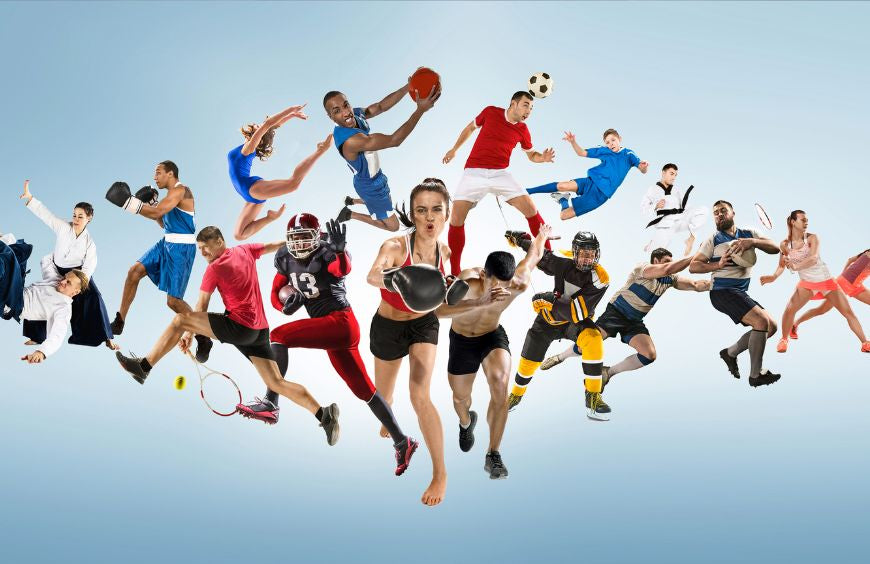
The growing popularity of CBD and its soothing, relaxing, and anti-wrinkle properties have propelled it to the forefront of sports-related wellness and recovery products. Whether it’s for pain management, aiding recovery, or managing stress during competition, CBD is said to be a trusted ally for any athlete.
What does the law say about CBD?
Each country has its own regulations regarding CBD. While some countries support it, others are strongly opposed to it. This is due to confusion between CBD and THC. THC has a psychoactive effect, whereas CBD does not.
On January 1, 2018,the World Anti-Doping Agency (WADA) removed CBD from the list of banned substances, based on numerous reports highlighting the effectiveness of CBD, particularly among athletes in recovery.
In its report, WADA therefore states that "cannabidiol is no longer prohibited." That said, it is important to note that it must be a CBD isolate—not full-spectrum CBD—and must therefore contain no traces of THC for the purposes of doping control.
With these new sports regulations, it’s only natural that a large number of athletes are promoting them across a variety of sports: martial arts, American sports (NBA, NFL, baseball), cycling…
It is worth noting that the last World Cup, held in Russia in 2018, was the first major international competition where athletes were allowed to use CBD without risking their careers (in terms of doping control).
At the same time, the International Surfing Federation (World Surf League) has approved the use of CBD for health reasons by surfers competing in events. This addresses the proliferation of drugs and other opioids, which have a very negative impact on users’ metabolism and lives.
Why is CBD beneficial for athletes?
CBD is one of the most abundant phytocannabinoids in cannabis. It can be produced synthetically or extracted from the hemp plant. CBD occurs naturally in industrial hemp (less than 0.3% THC). CBD is available on the market in the form of various products, such as CBD oil and CBD tea. The journal *Sports Medicine* reviewed more than 200 previously published studies on the physiological, biochemical, and psychological effects of CBD that may be relevant to athletic and/or physical performance.
For example, researchers have found that CBD may modulate the activity of the CB1 and CB2 cannabinoid receptors, thereby increasing levels of the endogenous endocannabinoid anandamide (AEA). But CBD doesn’t just work within the endocannabinoid system: it is also believed to activate the serotonin 5-HT1A receptor, the vanilloid TRPV1 receptor, and the γ receptor.
But what are the specific benefits of CBD for athletes?
Exercise is good for your physical and mental health. The WHO also recommends at least 150 minutes of moderate-intensity physical activity or 75 minutes of vigorous-intensity physical activity per week.
Regular or intense exercise can, however, cause muscle pain, cramps, soreness, and even injuries of varying severity. These are all harmful effects on the body that the benefits of CBD could help prevent and mitigate. It is a favorite among athletes, who regularly use it before and after workouts, games, matches, and even competitions.
CBD for Managing Stress and Anxiety
Like the rest of the population, athletes also face anxiety-inducing situations or vague feelings of fear. Consequently, competitive athletes are advised to adopt an anxiety management strategy before, during, and after a performance to prevent anxiety disorders and reduced performance and to improve recovery. This is where CBD could help with its anti-anxiety properties: preclinical studies show that CBD may be able to reduce perceived anxiety before, during, and after anxiety-inducing situations. These effects have been linked to the activation of 5-HT1A receptors and/or the indirect enhancement of endocannabinoid transmission and may occur in brain regions involved in anxiety, such as the limbic and paralimbic brain structures.
Interestingly, several studies also suggest that CBD may have a positive effect on fear memory. It has been shown that CBD alters the acquisition of fear learning in an animal model of schizophrenia and facilitates fear extinction processes in healthy humans. These properties may be particularly beneficial for athletes prone to PTSD, such as after a sports-related muscle injury or concussion.
CBD for Recovery, Regeneration, and Wound Healing
Recovery is almost as important as training. This is where CBD could be helpful in several ways: Regular use of CBD is primarily intended to support a healthy sleep cycle without causing drowsiness. Regular, high-quality sleep is the foundation of muscle recovery. While you sleep, your body can recover, balance hormones, and even break down fat. Athletes can also selectively use the phytocannabinoid CBD to manage pain, inflammation, and swelling associated with injuries. CBD could therefore become an alternative to ibuprofen, nonsteroidal anti-inflammatory drugs (NSAIDs), opioids, or corticosteroids.
Exercise, particularly intense exercise, can cause ultrastructural damage to skeletal muscle myofibrils and the surrounding extracellular matrix. Exercise-induced muscle damage thus impairs muscle function and triggers an inflammatory response that can lead to prolonged muscle soreness and delayed recovery. CBD is thought to modulate inflammatory processes. In preclinical models of acute inflammation, CBD has been shown to reduce the accumulation of immune cells.
When and how can athletes use CBD?
There are different ways to consume CBD. Which methods do athletes prefer?
CBD Oil
Athletes can use CBD oils in two different ways. The traditional method involves placing a few drops under the tongue several times a day, especially during training or competition.
CBD oil can also be applied topically, directly to the affected areas of the body after exercise.
CBD Creams
They are widely recognized, and their use among athletes is becoming increasingly common. In fact, CBD creams work in the same way as the balms, gels, and other ointments athletes currently use to relieve various types of pain caused by their sports (muscle and joint pain, bruises, etc.). A simple topical application to the painful areas of the body is said to relieve pain.
What is the best CBD product for athletes?
Each athlete chooses the form of CBD based on the exercises they’ll be doing. In addition, this legal, natural substance can be taken in various ways. Don’t worry—the effects are exactly the same. The onset of the effects and their intensity vary depending on the user’s profile.
Athletes have a wide variety of products to choose from depending on their situation: physical and mental preparation, injuries, post-workout soreness, sleep management, etc.
How does CBD testing work during a doping control?
Each year, WADA experts screen new compounds on the market for both legal and illegal substances. The following criteria determine whether a product is prohibited by sports authorities:
- If medications can potentially enhance athletic performance;
- While drugs threaten the health and well-being of athletes;
- If they undermine the spirit of the sport.
Fortunately, CBD has been approved since September 2019. This natural substance fully complies with current regulations. This active ingredient in hemp has no psychoactive effects.
Do elite athletes use CBD?
Many elite athletes and sportspeople use CBD in the sports world.
Culen Jenkins
A former star of the famous New York Giants, this player revealed that he used opioids and alcohol to relieve his pain and help him fall asleep. In 2016, after retiring from sports, his addiction to these painkillers and other drugs brought him to the brink of depression. He also stated that “CBD changed his life” and has invested in a cannabis company: Fresh Farm CBD.
Nate Diaz
The current MMA fighter has publicly stated on several occasions that he uses cannabis. His most widely publicized statement on the subject came during the post-fight press conference with MMA star Conor McGregor, where he appeared vaping CBD oil.
Floyd Landis
This, of course, has to do with his victory in the 2006 Tour de France, which was stripped from him due to doping. What is less well known is that toward the end of his career, he discovered the anti-inflammatory properties attributed to CBD. After retiring, he opened a cannabis dispensary in Colorado, a state that has had medical cannabis legalized since 2000.
Tanner Hall
He is a freestyle skier and a pioneer in the CBD industry. Tanner Hall is one of the most talented freestyle skiers of his generation, specializing in the halfpipe, and has won numerous major competitions. Like most extreme sports enthusiasts, Tanner Hall has suffered serious injuries throughout his athletic career. To manage pain and speed up his return to competition, he chose CBD over opioid-based painkillers, which can be addictive.
The use of CBD is growing rapidly, and numerous studies already indicate that the beneficial properties of CBD will be increasingly utilized by (professional) athletes in the future. It is important to pay attention to the source of the CBD products available and to determine for yourself the dosage that is right for your body.